Studio ACTE Builds With Mooring Posts, Rammed Earth and Reclaimed Steel
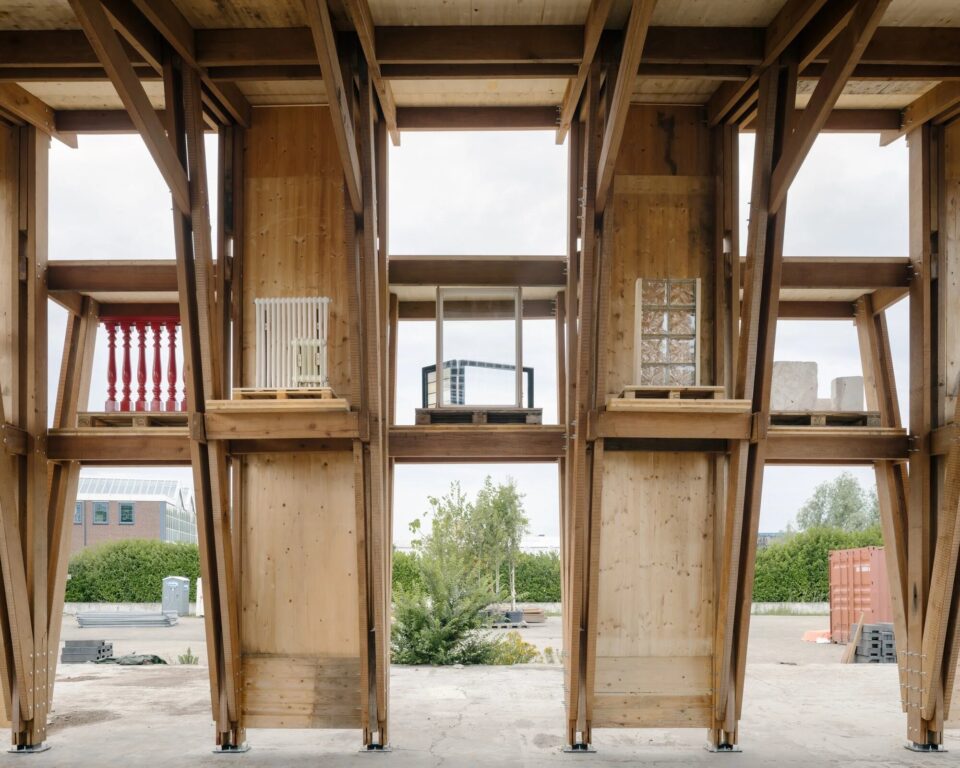
On the former Keilewerf site in Rotterdam’s M4H district, a timber pavilion stands on old harbour mooring posts. Around it lie eight large stacks of reclaimed structural timber, concrete elements, steel plates and stone. The Materialenwerf is the latest project of Studio ACTE, the Rotterdam architecture studio that received the SolidNature Residency at the Dutch Design Awards 2026.
Studio ACTE was founded in 2020 by French architect Estelle Barriol and is led by Barriol and Fanny Bordes, both trained at ENSA Saint-Étienne. The studio works from a large warehouse in the former port of Delfshaven and builds in the Netherlands, France and Belgium. Its method is design and build: models, material tests and assembly prototypes, followed by pavilions that the team builds itself at full scale. The residency comes with a €5,000 stipend and a joint project with SolidNature, a company that supplies natural stone for architecture and interiors.
A Pavilion on Old Mooring Posts
The Materialenwerf (Material Wharf) was designed for Rotterdam Architecture Month, commissioned by AIR and the municipality of Rotterdam, and its first phase was completed in 2026. It is a temporary public space and test site for the infrastructure that reuse at city scale needs: recovery, storage, processing and redistribution. The covered pavilion is built entirely from reclaimed material. Former mooring posts of basralocus, a tropical hardwood from the Guianas, form the main structure, with beams spanning up to seven metres over about 100 m². The frame rests on the existing concrete slab of the old Keilewerf and touches it at only sixteen points, so it can be taken apart again.
Each stack has its own story. CLT offcuts recall two decades of prefabricated timber construction. Gutters and profiles made by Halfwerk from reclaimed sheet metal show what industrial leftovers can become. A white truck tarpaulin that once covered an ice rink now serves as roof membrane and sunshade. The studio does not hide the colonial history of the hardwood but names it as part of what the material carries. Bollinger Grohmann did the structural engineering; Woodwaves and Van Engen built the pavilion together with the studio.
Rammed Earth in Rotterdam
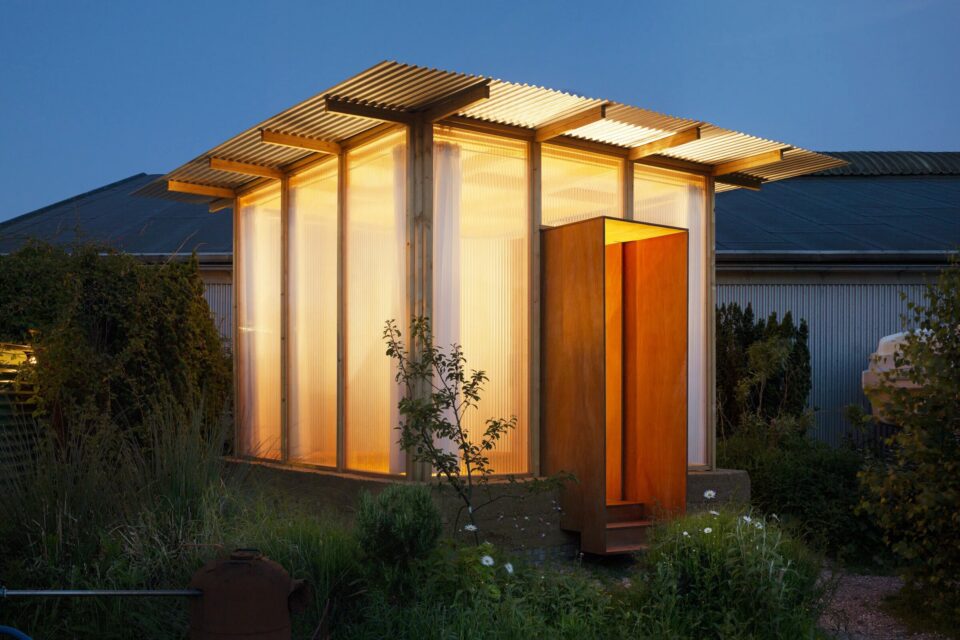
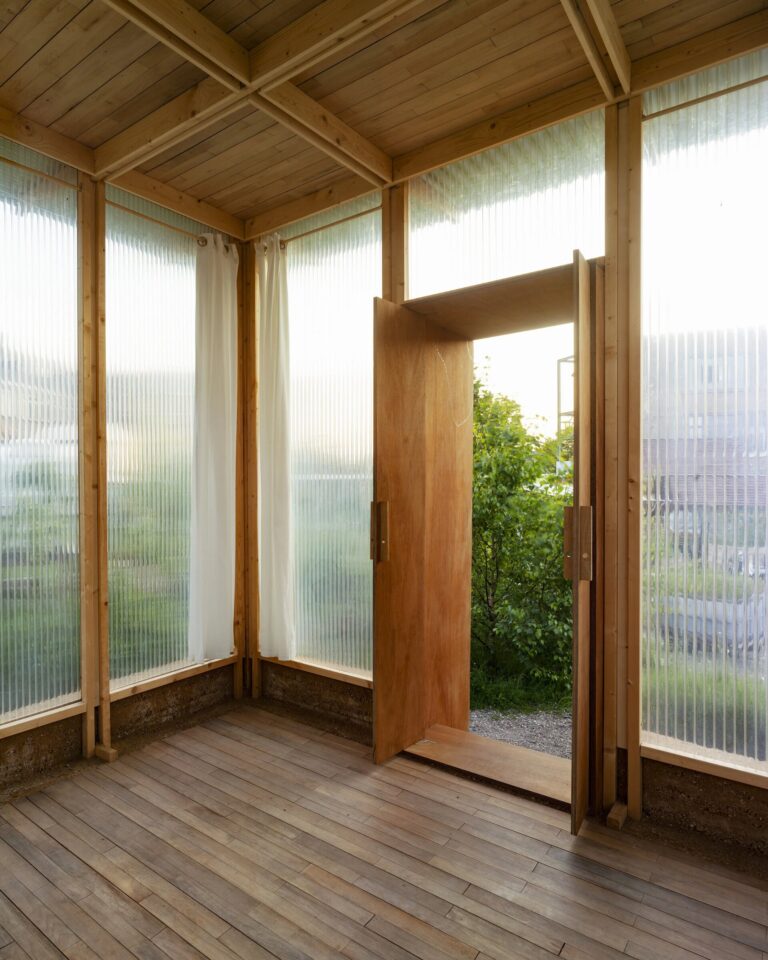
Earth is the studio’s other material. Its Circular Pavilion at De Kroon in Rotterdam, built in 2021, was the first project in the city to use rammed earth. Five tonnes of excavated earth from Brussels, supplied by BC Materials, were compacted into a wall without cement. On top sit reused timber from an old sports hall floor and polycarbonate from a chicken farm, so warm wood meets milky, translucent walls. Studio ACTE calls the cabin 80 per cent circular and reusable; it was longlisted for the ARC21 Detail award.
The approach links to other reuse projects on MaterialDistrict, such as a timber housing cooperative clad in reclaimed doors. With the SolidNature residency, the studio now turns to natural stone; what the joint project will be has not yet been announced.
Source: Studio ACTE – Materialenwerf / Studio ACTE – Circular Pavilion / Dutch Design Week · Photos: Stijn Bollaert and Rubén Dario Kleimeer, courtesy of Studio ACTE