Aléa Work Lets Soil and Fungi Shape Its Furniture
A chair dug out of the ground still carries the soil it grew in: lumpy, pale and flecked with scraps of denim, paper or fabric. Paris studio Aléa Work grows these Dirty Chairs underground, from waste materials and the mycelium of oyster mushrooms. Its work is now on show in Aléas, an exhibition at CID Grand-Hornu in Belgium that runs until 18 April 2027.
Aléa Work was founded in 2021 by Swiss designer Miriam Josi and Australian designer Stella Lee Prowse. They met on the master’s in Nature-Inspired Design at ENSCI–Les Ateliers in Paris. The studio describes itself as an experimental design and material research practice. Its subjects are growth, decay and reclaimed objects, with a special interest in what mycelium can do for damaged soil.
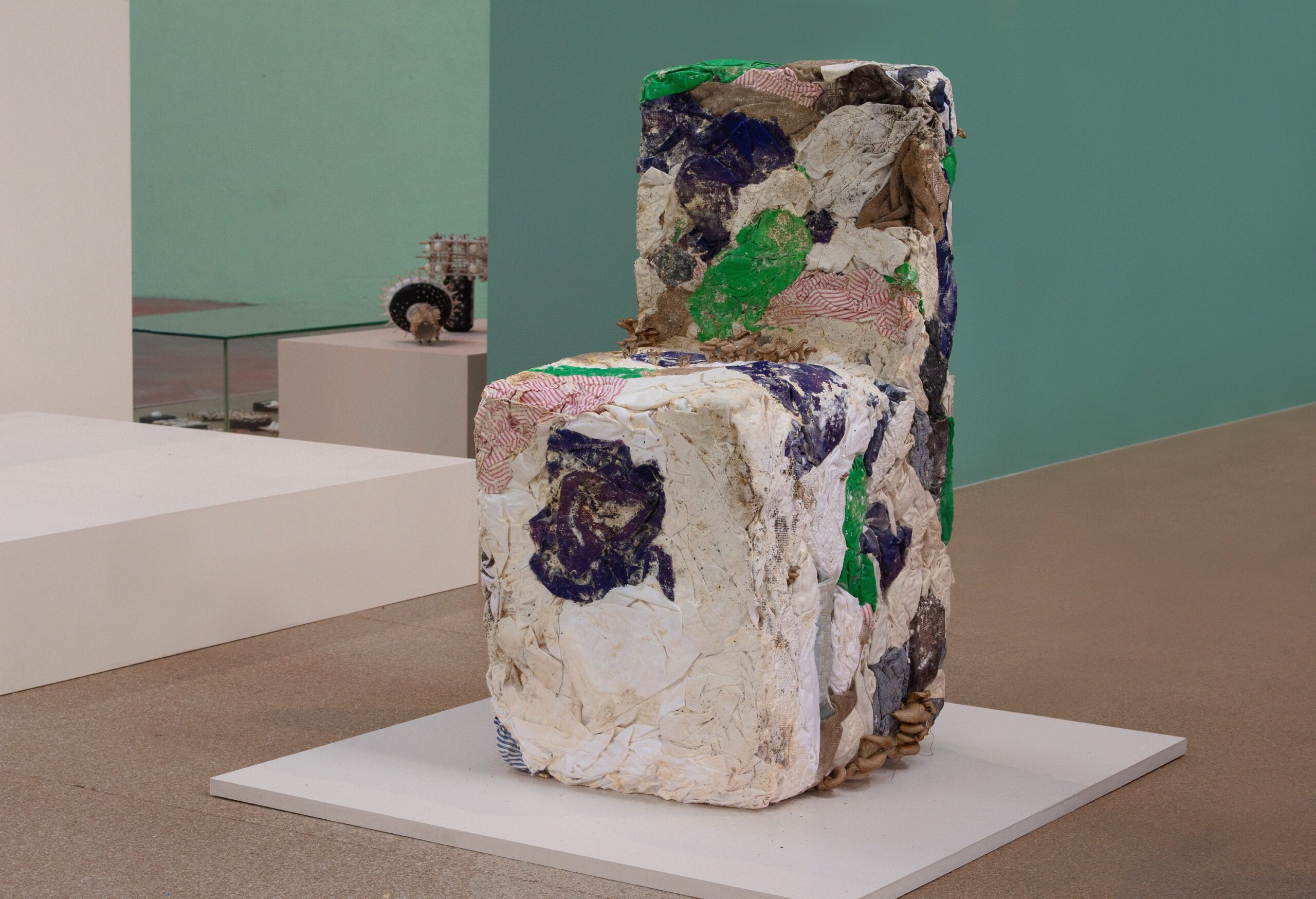
Soil Instead of a Plastic Mould
Mycelium products are usually grown in plastic moulds, under sterile conditions and with extra energy. The studio’s ongoing research project Back to Dirt skips those steps. The designers use local soil as the mould: they shape a cavity in the ground, fill it with organic waste and mycelium, and let the fungus grow the object there. At the same time, they study whether the mycelium can help regenerate the soil and bring back biodiversity.
The first full-scale result came in 2021. With the Boisbuchet Residency Award, Josi and Prowse took their lab outdoors at Domaine de Boisbuchet, a design centre in rural France, and grew their first chair underground. A year later followed Made in Soil, a series of miniature prototypes made with Carole Collet of the Living Systems Lab. The research is supported by FAIRE, the experimentation programme of the Pavillon de l’Arsenal in Paris.
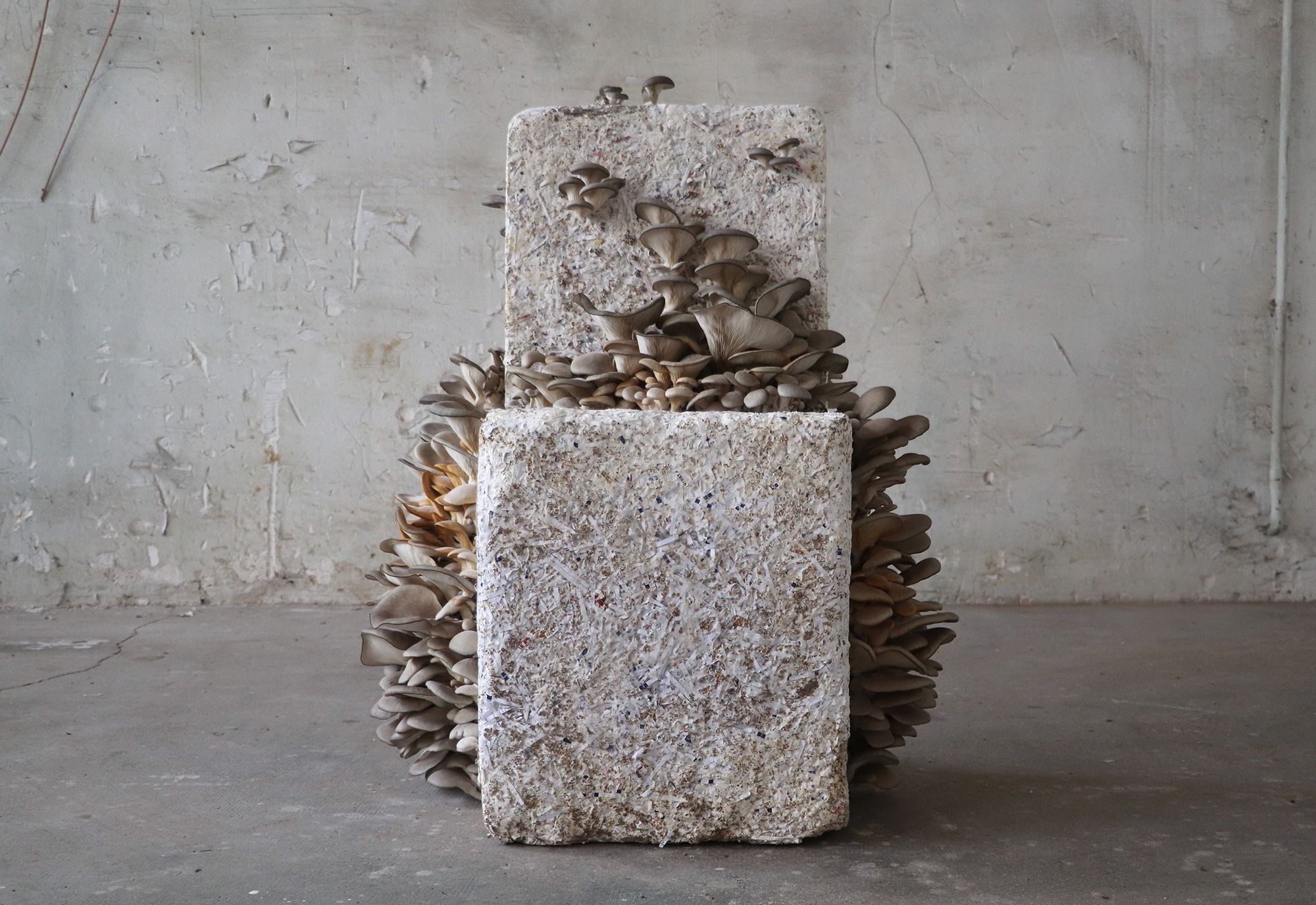
No Two Chairs Alike
The Dirty Chairs series shows how strongly the waste stream shapes the result. Some chairs sprout clusters of oyster mushrooms. Others stay blue with denim, or are speckled with shredded magazines that remain visible in the surface. The forms are blocky and soft-edged, closer to a boulder than to a moulded seat. The designers start from how a process behaves rather than from a fixed form, as they told designboom in a recent interview.
Chance plays a part too. Fabric samples that had been forgotten turned out to have lost colour where fungi had grown on them. That observation became Mycelial Patterns, a project in which fungi break down textile dyes and leave irregular, faded markings.
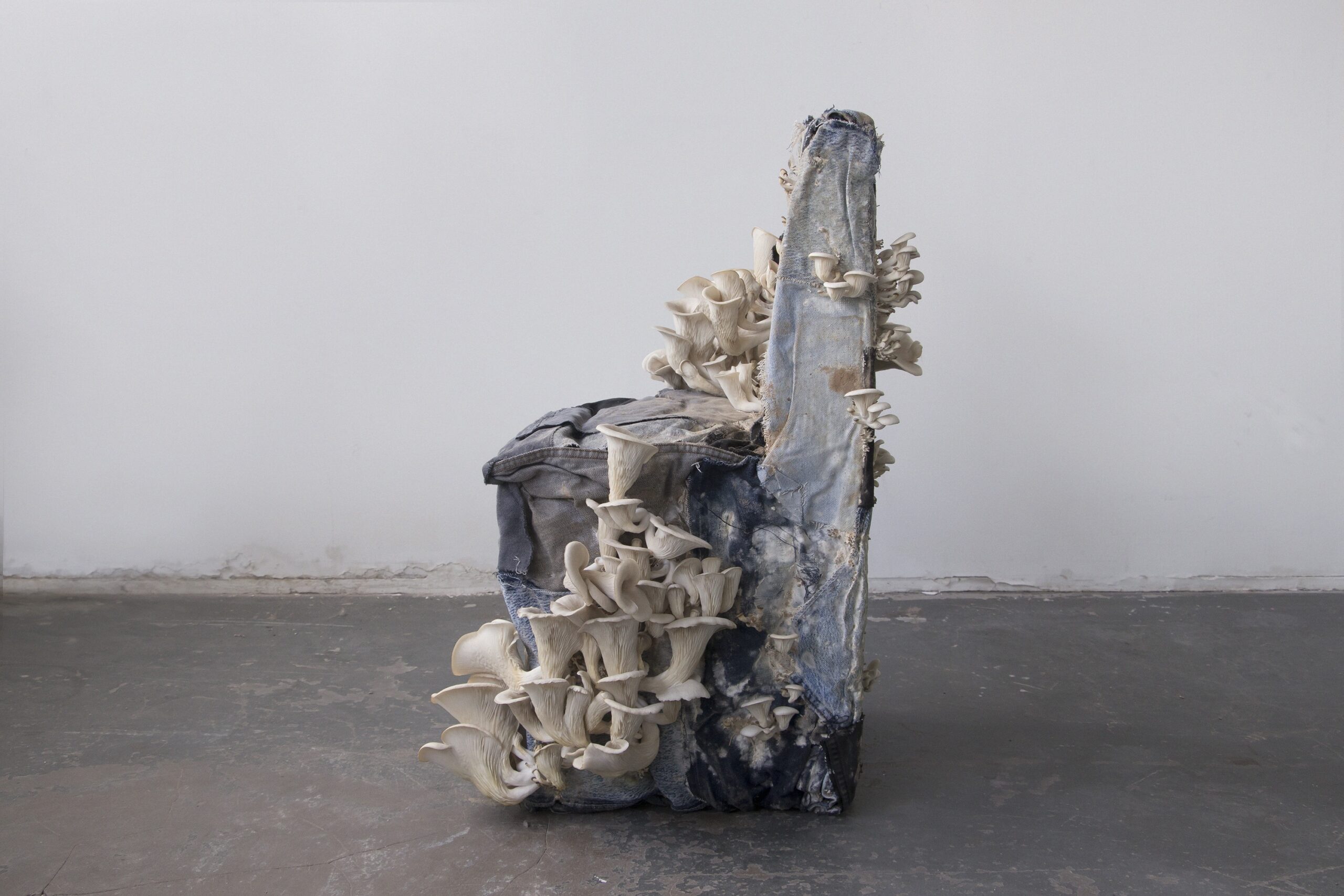
From a Garden Lab to a Museum Hall
In 2023 the studio launched The Garden Lab at Boisbuchet, a long-term research project on designing with living systems, and it ran a summer workshop there in 2026. Its work has been shown at the Pavillon de l’Arsenal in Paris, the Bundeskunsthalle in Bonn and the Biennale Design in Saint-Étienne. In Aléas, curated by Baptiste Meyniel and Nicolas Verschaeve in the Magasin aux Foins at Grand-Hornu, the studio shows Champignonnière, made with Julie Brugier. Other work with fungi on MaterialDistrict includes Growing Facade’s mycelium acoustic tiles and glowing mycelium sculptures.
Source: Aléa Work, CID Grand-Hornu, designboom