Glowing Mycelium Sculptures Head to Berlin Science Week
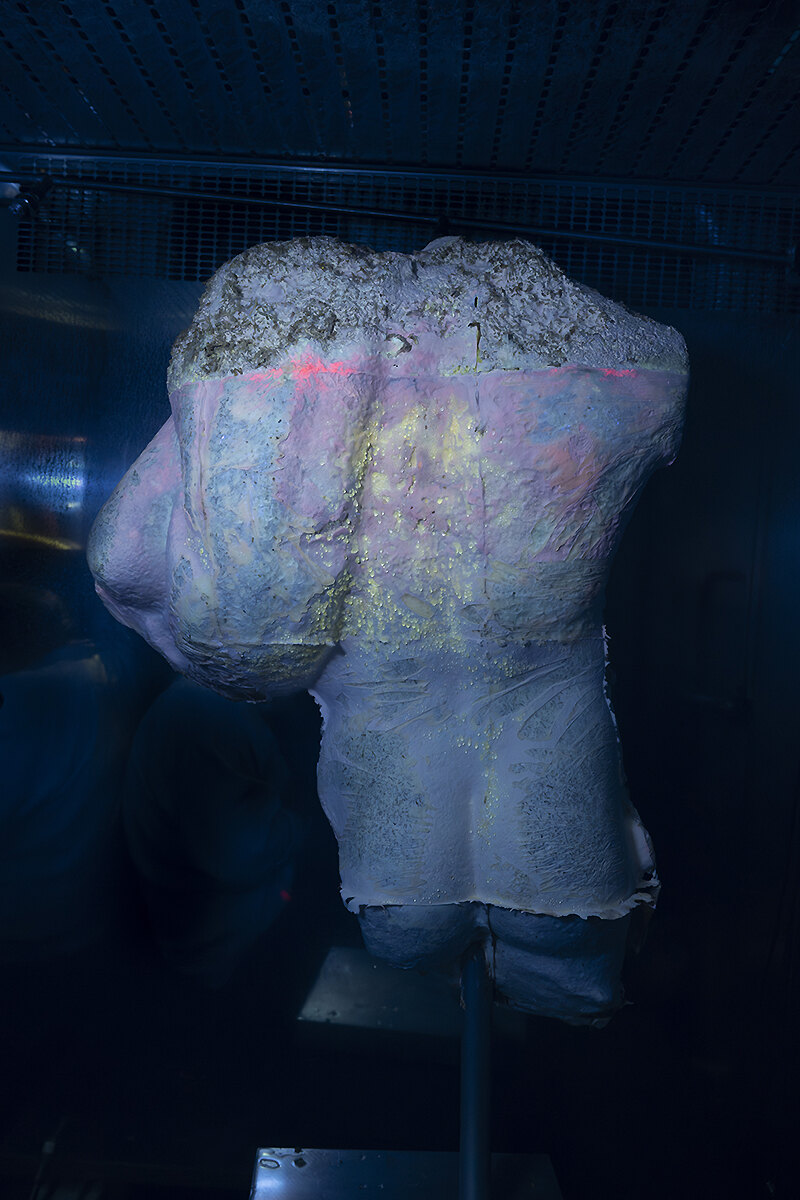
Under black light, a torso of Dionysus begins to glow in pink, yellow and violet. The sculpture is not painted: it is grown from wood residues and the living mycelium of Ganoderma, a group of shelf fungi. The Fraunhofer Institute for Wood Research WKI and visual artist Malte Taffner showed works from their LuminousNetworks project at Berlin Science Week, from 6 to 8 November 2026.
The exhibition took place at the Haus der Kulturen der Welt in Berlin, as part of Berlin Science Week (1–10 November), whose theme this year is “In Touch”. LuminousNetworks is an art and research project funded by the Fraunhofer network “Science, Art, and Design” and runs from September 2025 to August 2027. Project leader is Dr Henrik-Alexander Christ of Fraunhofer WKI in Braunschweig, an institute that develops materials, binders and components from renewable raw materials.
Wood Residues as a Growing Medium
Taffner makes the sculptures from wood residues colonised by mycelium, drawing on the technical knowledge of the WKI mycelium laboratory. The fungus binds the substrate into a solid form, and the colour and texture of Ganoderma become the surface of the work. For Christ, the aim is to show a wide audience what fungal mycelium can do as a material. Taffner uses the material to explore protection, cooperation and diversity in relation to the body and gender, borrowing the iconography of Greek mythology and taking it apart.
A Colour Shift That Usually Stays Hidden
The exhibition is built around a property that is normally invisible: mycelium fluoresces. Under UV light the material glows in intense colours, and those colours change as the mycelium develops. Black light on site, photographs and video footage will let visitors follow that shift. The first test piece, the torso of Dionysus, already shows the effect.
Mycelium is mostly tested as a binder for panels, acoustic elements and packaging; MaterialDistrict’s overview of mycelium materials for architecture and design collects several examples, and grown materials at Dutch Design Week 2026 showed more. LuminousNetworks looks at another side: how a grown surface looks and keeps changing when it is left visible.
The sculptures are artworks and research objects. The project continues until August 2027.
Source & images: Fraunhofer WKI