Search
26 results for “dye” in materials
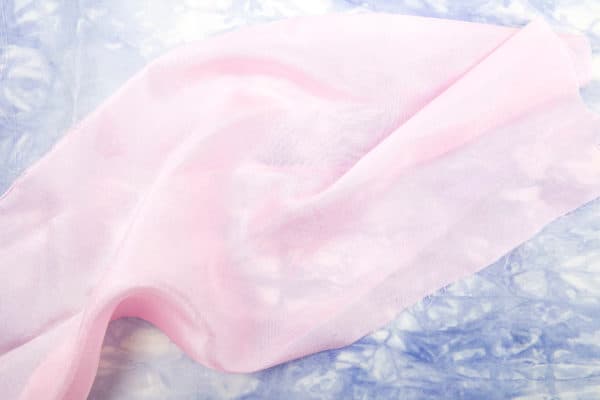
- Ever DyeEver Dye is reshaping the fashion industry with efficient dyeing processes and sustainable colours. They have developed two green chemical solutions that are compatible with dye houses’ existing infrastructures. The two chemical solutions act like a magnet.
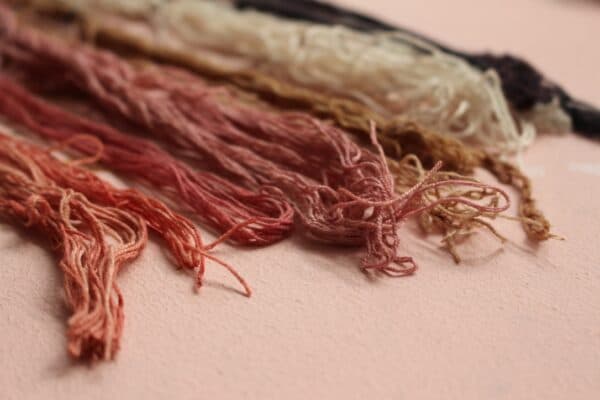
- Traditional Indian natural dyesParmeet Tesson’s project explores the adaptability of traditional Indian dye plants in the Cognac region of France to examine their climate resilience and ecological benefits. It focuses on utilizing both native and traditional materials in new, sustainable ways. Parmeet uses dyes made from oak tree byproducts, indigi, mulberry leaves, madder root, and grape leaves.
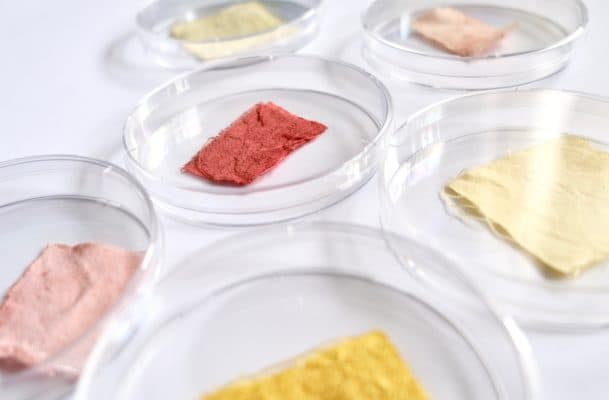
- Fabulous Fungi dyeFabulous Fungi employs fungi in order to create sustainable and safe textile dye, without the use of harmful chemicals. The biochemical processes of these fungi produce pigments. These pigments, which form the basis of the textile dye, are biodegradable. The panel shows textile (50% lyocell/50% organic wool) dyed with natural dye based on red and yellow fungal pigments. Washable, preferable cold. Slightly light sensible.
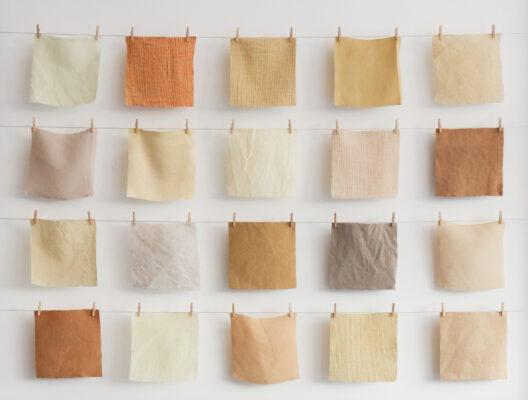
- Natural textile dyeNatural textile dye uses dyestuff extracted from plants and animals like trees, flowers, etc. The dyes are won from exclusively natural non-edible materials like stems, skins and roots of plants. The plants include Natural Indigo, Gallnuts, Madder Root, Lac, Pomegranates, Himalayan Rhubarb, Myrobalan and Catechu. Not all fabrics are suitable for natural dyeing.
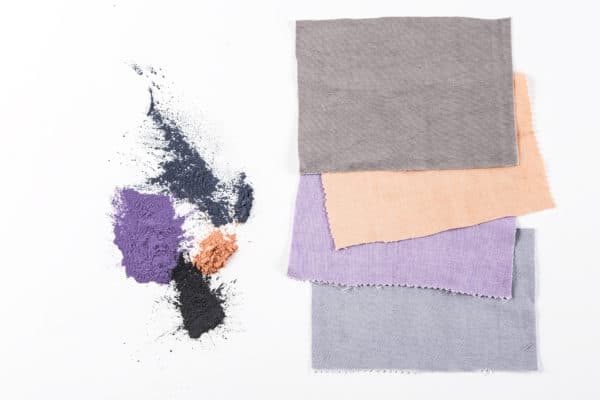
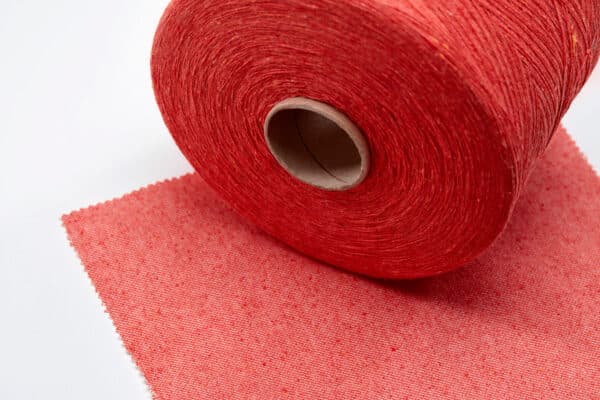
- Recycrom fabric dyeRecycrom creates a full range of pigment powders using textile fibres from used clothing and manufacturing waste. Through a process using only natural chemicals, fabric fibres are crystalised into a fine powder that can be used as a pigment dye for fabrics of cotton, wool, nylon or any natural fibre. Recycrom can be applied using exhaustion dyeing, dipping, spray, screen printing and coating.
- Seaweed dyeThe dye is 100% seaweed based and can be made from brown, red or green seaweeds or seaweed waste streams. The product can be supplied as a powder, liquid or dyed directly onto a fabric. The dyes are local, sustainable and together with a transparent production chain.
- Natural dyeDesigner Lucila Kenny started researching on the tinctorial properties of local plants, from the seasonal waste, for a more responsible application of dyes on natural textiles. She harvests from fallen trees, but also uses plant waste from gardens, or even food waste.
- 100% bacterial dye“LAB_MADE” illustrates the potential of grown pigments. These samples have been dyed with pigments obtained from bacteria. Bacteria can be grown instead of produced and their rapid production rate makes them an interesting resource to work with.
- ALCHIMIA – Natural Yarn dyes on Milk fibreA versatile range of natural dyes developed on milk protein-based yarns in collaboration between designer Shahar Livne and Dyer Roua AlHalabi, made from materials driven from animals such as blood, collagen, and milk, minerals such as hematite and aluminium, plant parts such as oak apple and flowers and roots of the Rubia tinctorum plant; together, the materials create a rich variety of colours through alchemical reactions.
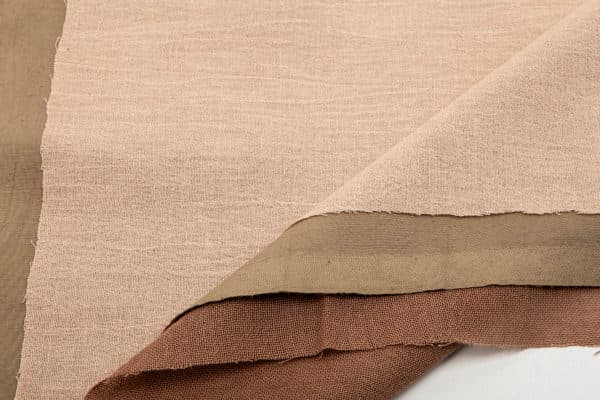
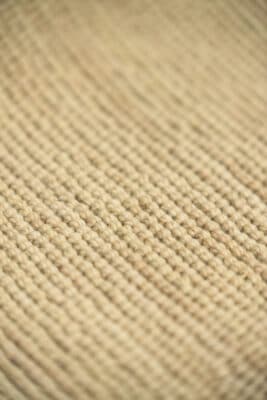
- Seaweed dyed woolen carpetThis wall-to-wall carpet is made from high-quality wool yarns, dyed using Zeefier®, a proprietary dye technology based entirely on seaweed and developed and produced in Europe. The carpet combines the proven performance of wool with a next-generation, biobased colouring process, fully aligned with European manufacturing standards. The colour shown here is sand.
- Living ColourLiving Colour is a dyeing innovation by Dutch designers Laura Luchtman of studio Kukka and Ilfa Siebenhaar that uses pigment-producing bacteria to colour textiles and other materials. Living Colour offers a viable alternative to synthetic dyes; the biodegradable dyes can be produced with far less water and energy and without hazardous chemicals or pollution.
- Linen textileWith 31 Dornier looms Deltracon weaves high quality linen curtain, sheer and upholstery fabrics. Design and technical teams continuously strive to discover and develop new techniques, e.g. stylish dye techniques (tie dye, dip dye, spray dye, inkjet), the applying of various coatings, shrink effects etc.
- Rubia RedRubia Red is a vegetable colouring agent in a powdered form. It is extracted from the roots of the Rubia tinctorium, or ‘madder’. The dye bonds with textile and other products, such as wool and leather, coatings, paints, make-up. Variations make it possible to cover around 40% of the entire colour spectrum.
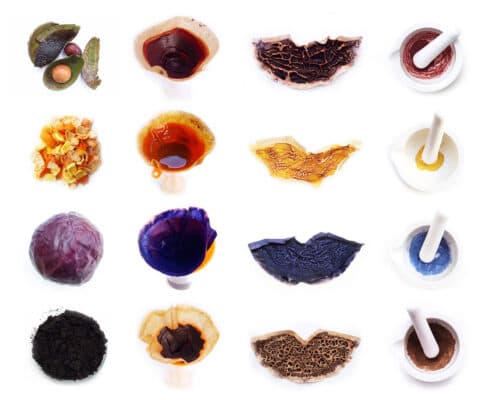
- Food Waste PigmentWith her graduation project, The Colour of Waste, Sara van Laerhoven wanted to go back to basics and show how special and beautiful colour can be and that it can be natural. By using material research, she found a way to make a natural alternative to synthetic inks to use in graphic workshops. This alternative is made from food waste. In this case from coffee grounds, avocado seeds, red cabbages and orange peels.
- Velvet IndigoBy dying velvet with plant dyes, every dye reacts different on the specific materials. Indigo (blue) prefers viscose while madder (red) likes the silk. Using these characteristics, magical effects appear. A very exciting product is created through a small collaboration with nature. Material: silk/viscose velvet, dyed with indigo and madder
- Magnetic leather wall and floor tilesBlackstock magnetic leather tiles are especially made for indoor wall and floor covering. The tiles are suited for any sort of room except rooms with a high humidity, such as bathrooms and kitchens.
- Photochromic PigmentsReversacol photochromics can be combined with a wide range of special effect colourants such as light angle-dependent interference pigments, thermochromics, liquid crystals and permanent dyes to produce unusual photochromic effects or colour to colour effects.
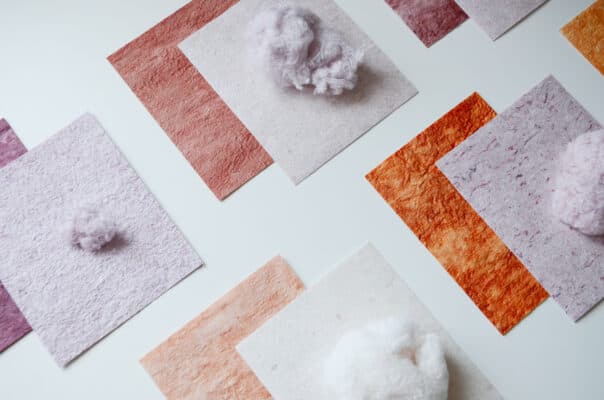
- Bianni’ – Wool PaperBianni' tells the story of an ancestral material, re-crafted to reveal the hidden value of discarded wool from the handmade carpet-making process. This project brings new life to wool that would otherwise be wasted, transforming it into a functional object that bridges the gap between tradition and innovation.
- CASULO FELIZ – PRIMITIVE SILKPrimitive Sustainable Silk Hand Dyed with Natural Plants Inspired by artisanal craftsmanship, Global Green brings to the market Casulo Feliz primitive silk. An amazing…
- (Un)woven(Un)woven is a biotextile made of inferior textile fibres, created as an alternative to the flawed traditional textile recycling process. A unique production method turns inferior mixed blends into a lightweight biotextile suitable for interior, furniture and product design applications. Emphasizing recyclability over longevity, the sturdy material can be recycled at the end of its life and repurposed for new production cycles over and over again.
- Subli TechPhoto print on metal sheet with sublimation technology. This is a process that uses heat to transfer dye to a medium such as aluminum, metal, glass, cardboard or MDF. This technology is based on the transition of a substance between the solid and gas state, which solidifies the print into a resistant durable layer, without going through a liquid stage.
- TFL Cool SystemThe TFL COOL SYSTEM® is based on a sun reflective technology whereby energy is reflected in the invisible part of the solar spectrum. It consists of a range of selected dyes and pigments, namely SELLA® COOL dyes and RODA® COOL pigments.
- Wolkat post-consumer textile-to-textile recycled fabricsWolkat’s recycled textile fabrics are circular materials produced from post-consumer textile waste. Discarded garments and textiles are transformed into new fabrics with a reduced environmental footprint. The fabrics are manufactured through a mechanical textile-to-textile recycling process that operates without dyes or chemical treatments.
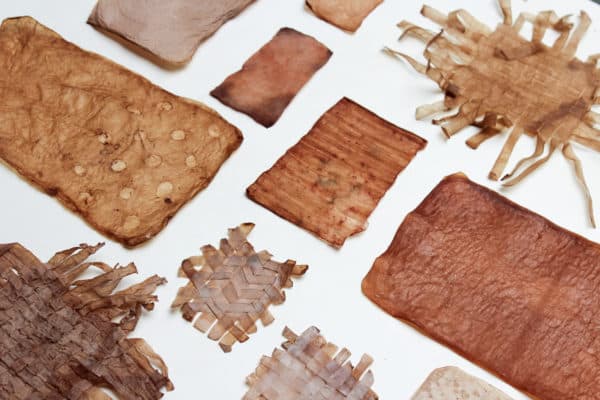
- Biological grown materialStudio Lionne van Deursen developed a collection of biological fabrics dyed with natural pigments. During this ongoing material research the possibilities of a biologically grown material are investigated. Microbes are used to grow this biological material which is made of bacterial cellulose.