Search
10 results for “ocean” in materials
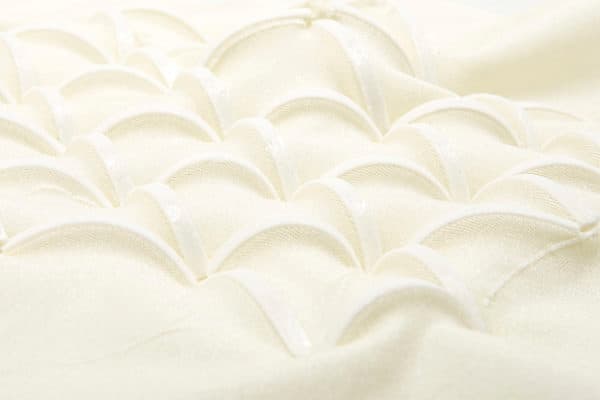
- OceanicSaving our ocean one bottle at a time, each metre of Oceanic is woven from yarn made from 26 plastic bottles. Delicately dyed using cationic yarn, this multi-tonal textile combines and contrasts a light warp with a deeply saturated weft. With an intricate twill weave, this visual detail creates a subtle pattern - enhancing both the considered colour and careful construction of the fabric.
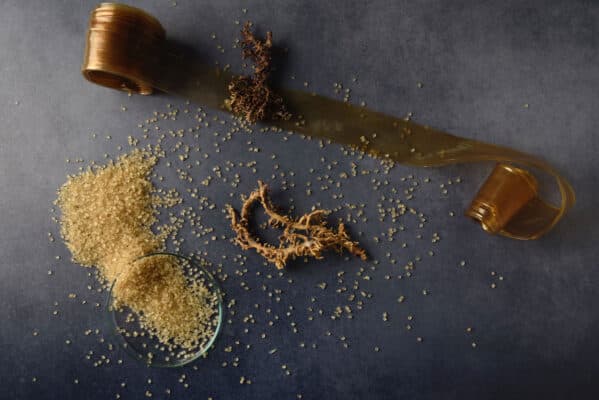
- Ocean-Safe Seaweed FilmDeveloped with seaweed and other natural resources, this transparent film is developed to replace harmful single use plastic often used in packaging. It looks and behaves like legacy plastic but degrades harmlessly and naturally unlike plastics. It is non-toxic, home compostable, ocean safe. No petrochemicals. No microplastics. No persistent waste. Seaweed was chosen for a reason.
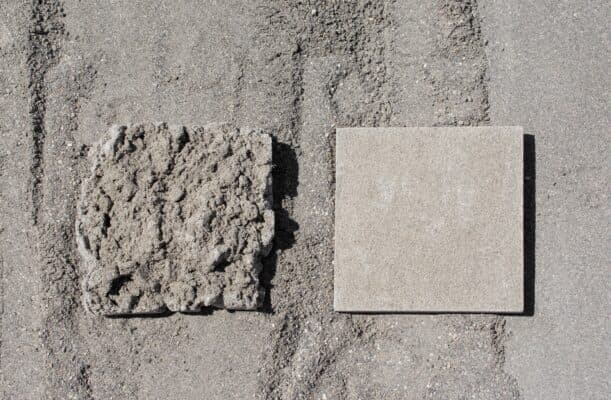
- Ocean ArticulatedOcean Articulated is a recyclable and load-bearing material with locally extracted salt, sand and plant based natural binder. It is water dissoluble and sensitive to the humidity over 80%. Considering the environmental impact of sand extraction and the associated transportation costs, the question arose whether there is a way to use sand as a reusable material and communicate this aesthetically in a form appropriate to the material.
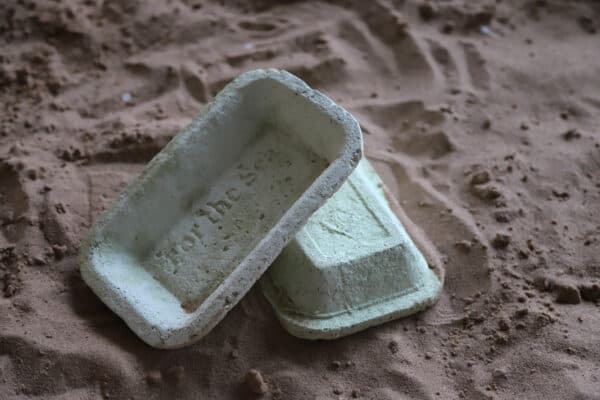
- For the seaThis project tackles the issue of Ocean Acidification from the root of CO2 emissions by replacing fossil fuel-based materials used for beach activities objects with pH-neutralising (adsorbing) natural reclaimed materials (oyster shells), natural CO2 absorbing minerals (Olivine) and natural seaweed binders, which not only cuts down CO2 emissions but also has the added value to help regenerate ecosystems at the end of life of the product.
- NeptuThermNeptuTherm® is a 100% natural, high-performing insulation material made from the fibres of ‘Neptune balls,’ also known as the seaweed plant Posidonia oceanic. It is naturally fire resistant (B2), offers class 1 mould resistance, is great in terms of heat storage capacity and has a thermal conductivity of 0.037 W/(m•K).
- PlarixPlarix is a material made of recycled plastic waste. In the UK alone, over 5 million tons of plastic are consumed each year and less than a quarter of it gets recycled. That means the rest of it ends up in our environment, in landfills and the ocean. Plarix is created from an array of plastic such as bottle tops, CD cases, coat hangers and plant pots….but the best part is that with a little R&D it can be made with any plastic waste, even waste collected from the ocean.
- 3D print on stretch fabricLABELEDBY. is a research and technological development studio, based in Eindhoven, the Netherlands, focusing on the possibilities of new techniques as 3D printing in combination with textile. By 3D printing on textile, the fabric's shape becomes permanent.
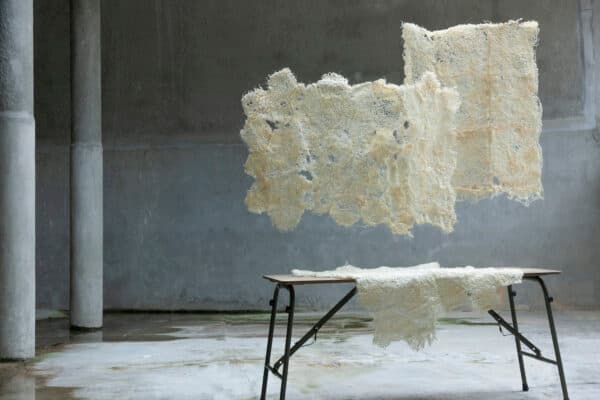
- Root TextileRootfull unites design with biology and reconnects humanity with Nature. It’s a pioneering venture that grows wheatgrass into templates carved from beeswax to create lamps and acoustic wall hangings from root. The textile is grown simply with wheatgrass seed and water to create a material that is woven entirely by Nature.
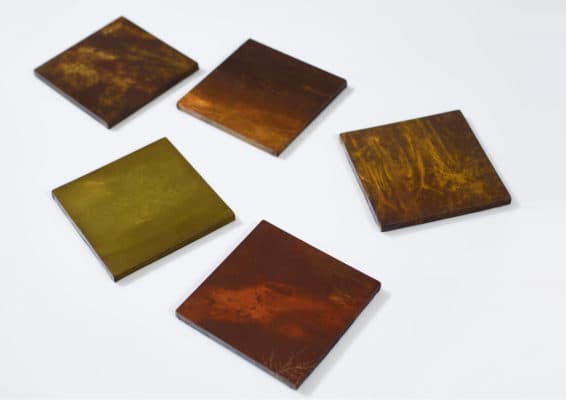
- Algal TilesAlgal Tiles are ecological & luxurious tile solutions for interior design, made of carefully selected kelp algae from the Pacific Ocean. The combination of colours, shades and patterns are given by the natural look of the kelp algae. Every tile is unique and unrepeatable. Kelp is the fastest growing species in the world. It has been known to grow up to 60 cm in a single day.
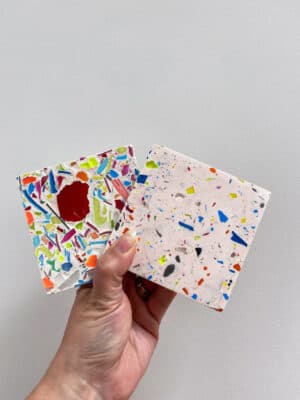
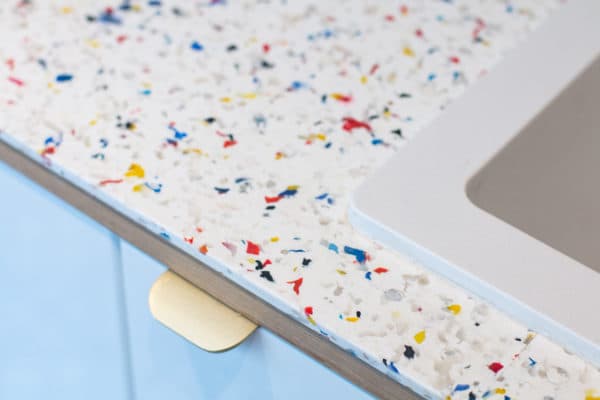
- Le Pavé® recycled plastic panelLe Pavé is the first floor covering composed of 100% waste plastic recovered from nature and from the ocean. The material has a speckled look. To maximize the ecological and social impact, the plastic is guaranteed fair trade under the label 'Waste & Hope'. The plastic is mostly collected directly from nature and near the oceans.