Search
63 results for “leather” in materials
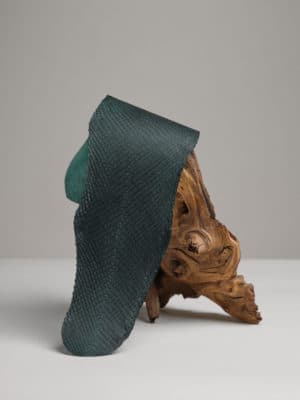
- Squama® salmon leatherSQUAMA® leather is made from salmon skin. It is made using vegetable tannins composed of leaves, roots, or fruits to minimize the impact on the environment. In the logic of upcycling, Ictyos uses only skins from the French agri-food industry.
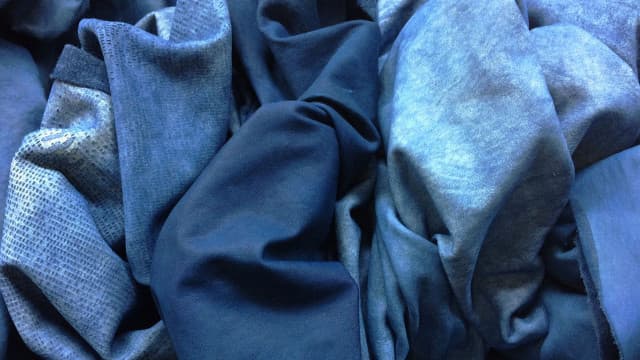
- Indigo leatherThe color between blue and violet, these colorfast indigo leathers are made combining the best of multi-dip denim-inspired dyeing processes with the most cutting edge tanning and color-fixing techniques from the leather industry. Developed by Eccoleather's innovation centre, the Open Circle Lab and Amsterdam’s globally respected denim industry.
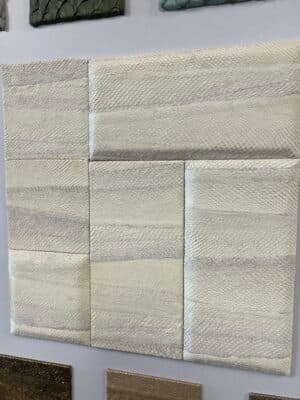
- SALMON LEATHER PANELSSalmon leather panels: unique leather welding technique Crafted from salmon leather skins meticulously welded in a parallel arrangement, these exquisite panels exhibit remarkable durability,…
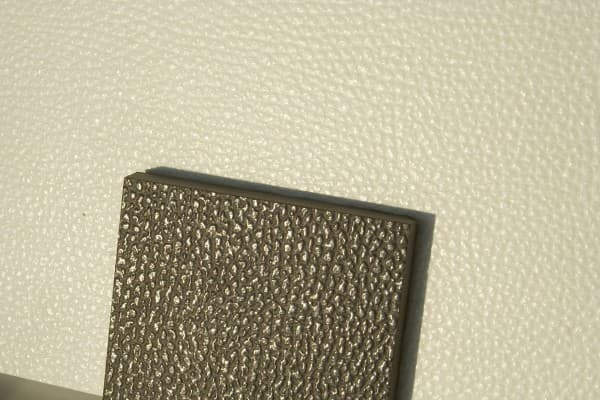
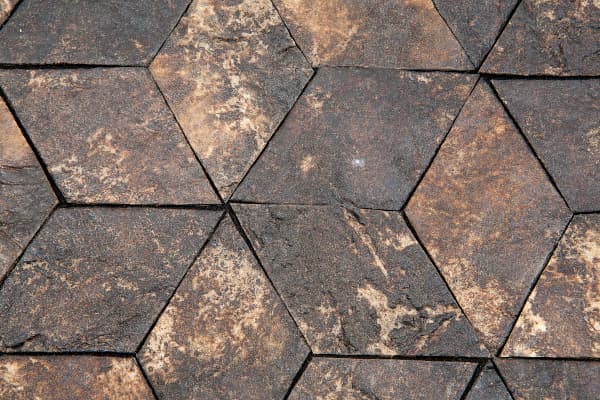
- Leather look tilesHaute Couture in ceramic tiles. Ceramic tile with very realistic look and texture of leather. Available in the size 60x60 cm (23.6x23.6’’), 30x60 cm (11.8 x 23.6’’) sizes. Thickness 12 mm. Full body stoneware, double pressed.
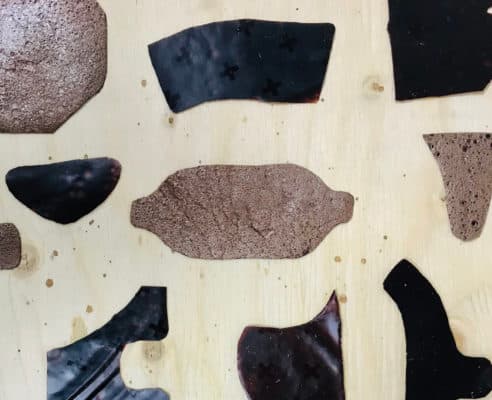
- Blood bio leatherBio material sheet made of 100% slaughter house waste/low value by products.
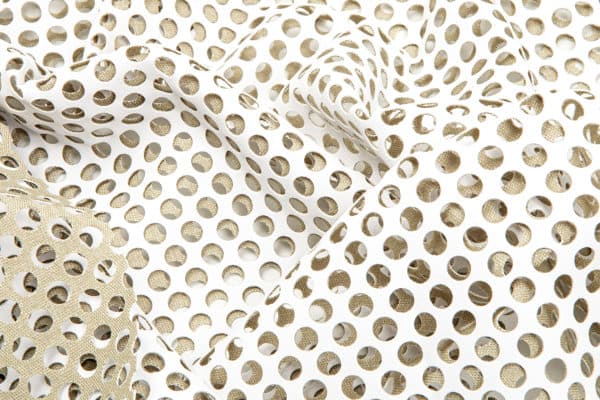
- Polyurethane fake leatherThis polyurethane leather alternative has a viscose backing. It is available in plain and lasercut.
- Fake boa leatherThis fake boa leather is made of 92% polyester and 8% elastane.
- Leather W-all FashionW-ALL FASHION's magnetic system allows you to create your own design.The Oro&Luce collection represents a selection gold textures in 24K gold, printed leathers, mother of pearl, glass pearls, CNC carved wood and DuPont Corian solid surfaces.
- Ventri cow stomach leatherEach of the cow's four stomachs has different properties, shaped by their function. Some are like winding landscapes, others are almost reptilian. In a labour intensive process, designer Billie van Katwijk transforms their raw, natural aesthetic in a range of leathers with their own look and feel, for the use in luxurious design.
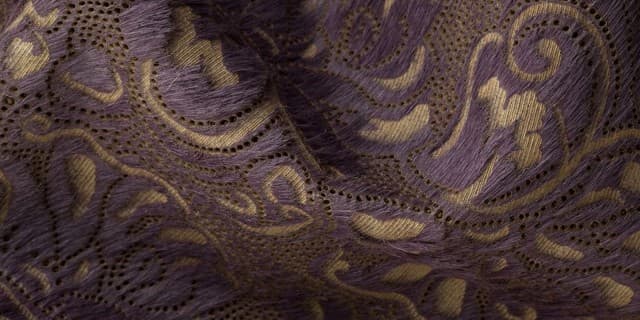
- Mojave leatherThe leather is embossed and etched to create patterns that remind of delicate lace with floral or organic patterns. The designs of both the Mojave Brussels and the Mojave Moroccan Lace collections are carefully etched into a hair-on-hide surface. Coordinating fabric backing provides a subtle backdrop.
- From Insects: Wooden LeatherThe silkworm cocoon is composed of raw silk threads measuring between 300 and 1000 meters. Each thread contains hundreds of layers of fibres, which contain a natural glue called Sericin. This natural glue can be activated by spraying water and heating the fibers. The outcome is a strong paper that can be layered and varnished to create a wooden material.
- Persiskin persimmon leatherPersiSkin is an alternative to animal or synthetic leather is plant-based, made of persimmon waste. It is estimated that more than 50% of the persimmon crop was wasted each season. PersiSkin created a new textile that uses this waste and can be produced commercially.
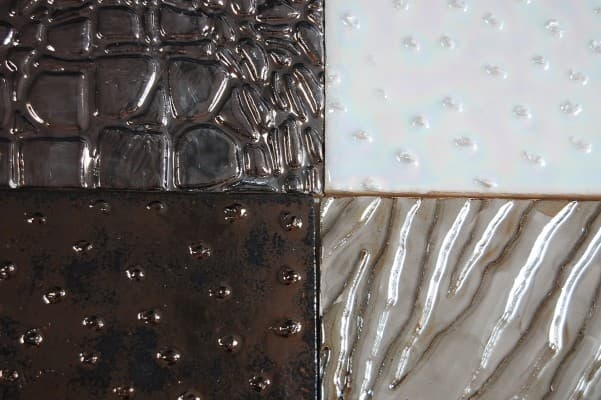
- Animal & Leather Print TilesThese exclusive handcrafted clay tiles can be custom manufactured in every shape, print, pattern or painted motif desirable. The surfaces consists of 3 layers of enamel and glazing. Colours used are Inspired by African plains, animals and frosted glass.
- Squash leatherThis looks like heavily embossed leather but the design is applied by means of serigraphing the leather which is then raised by means of vacuum suction.The technology to do this on full hides is exclusive to Futura Leathers. The leather is available in 5 colours in the warehouse in Italy and can be supplied in even just one piece.
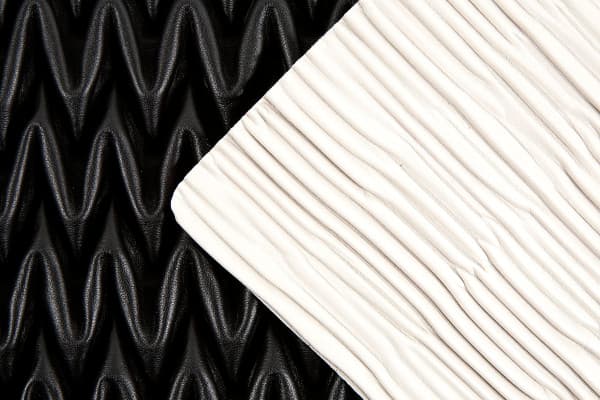
- Foglizzo FoldsFoglizzo Folds is a collection of pleated leather developed by Pinaki Studios. The hides are folded into intricate paper moulds that were designed and made by hand, and which follow patterns that borrow inspiration from traditional pleating techniques. These are then subjected to high temperature processes to give the leather the form and structure of scales and shells.