Hollow-Core Slabs From a Dismantled Office Return in Heerde
Hollow-core floor slabs that carried a provincial office in Arnhem for some forty years are about to become floors again in Heerde, Gelderland. Circulair Centrum Nederland (CCN), a meeting place and living lab for circular construction, received its building permit this month. Construction is expected to start within months.
The donor is Prinsenhof A, a nine-storey office of the Province of Gelderland. In 2022 it was not demolished in the usual way but taken apart by dismantling company Lagemaat, the initiator of CCN. Concrete hollow-core slabs and load-bearing precast façade elements were harvested and have since been stored on the site in Heerde, beside the A50 motorway. The new building is designed by cepezed.
Slabs That Were Never Meant to Move
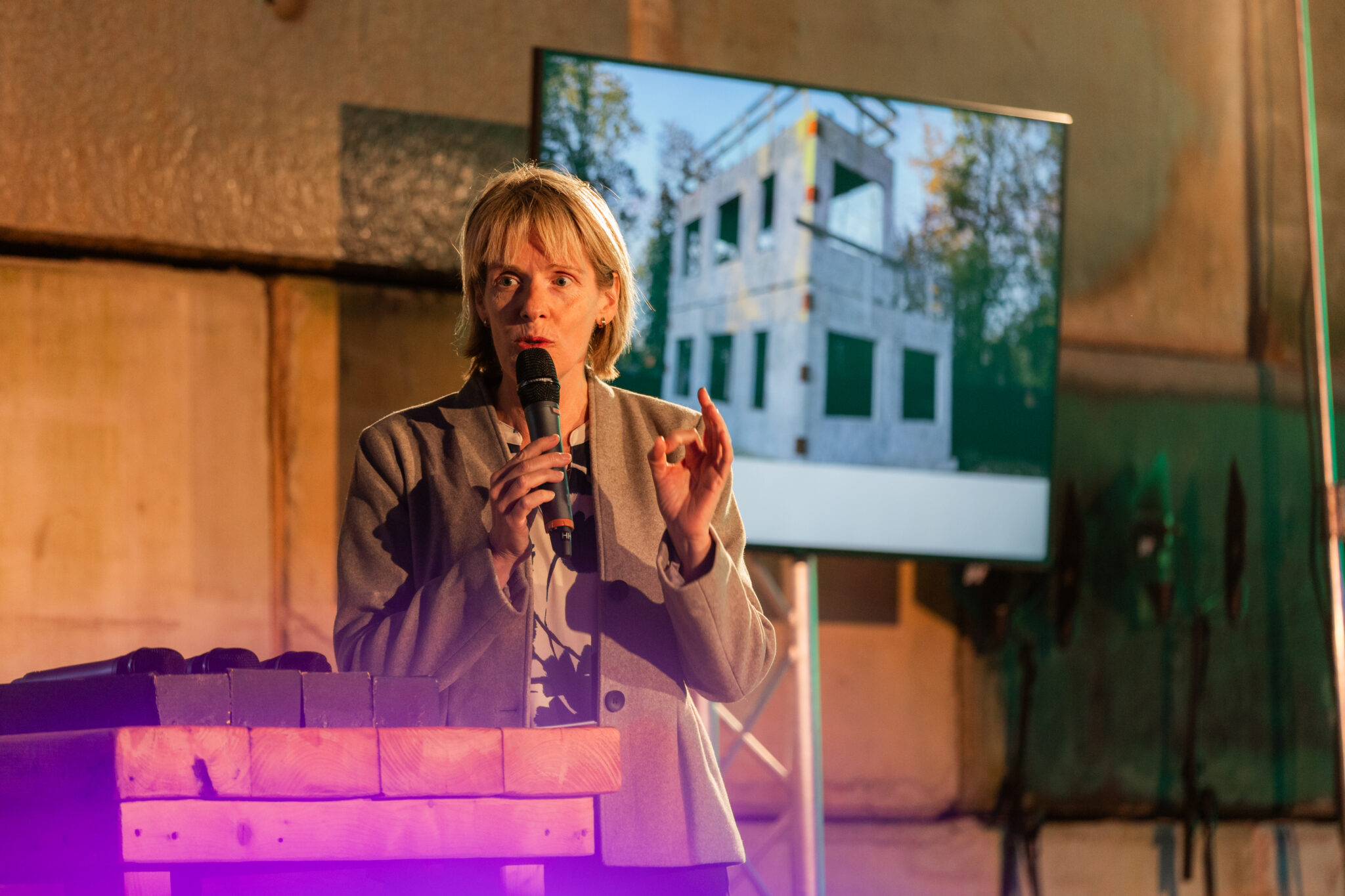
Reusing these elements is not straightforward. The slabs and façade panels were cast for one building and never designed to be taken down and put up again. Engineers at IMd Raadgevende Ingenieurs studied their structural properties, designed with the dimensions that were available and developed new connections between old elements. A full-size mock-up on the site was used to test the connections, tolerances and assembly before the permit was granted. Its raw grey panels, window openings and slab edges give a first impression of how the reclaimed concrete will look.
According to CCN, research shows that each reused slab saves around 750 kg of CO2, and that slabs that have been in service for decades can be up to 25% stronger than new ones. An earlier design note from cepezed sums up the approach simply: where possible, elements keep their original role, so floors stay floors. The work is part of ReCreate, a European research programme on the high-value reuse of precast concrete. Similar questions are being asked elsewhere, for instance at the Thames hub for salvaged concrete planned by Arup and Queen’s University Belfast.
A Passport for Every Slab
To make reclaimed slabs easier to specify, a parallel research project called COKaP is developing digital product passports. These record each slab’s origin, properties and test results. Saxion University of Applied Sciences leads the project, with partners including Windesheim, slab producer Dycore, Lagemaat, cepezed and the Dutch demolition contractors’ association VERAS. It links to wider efforts such as the framework for the safe reuse of concrete.
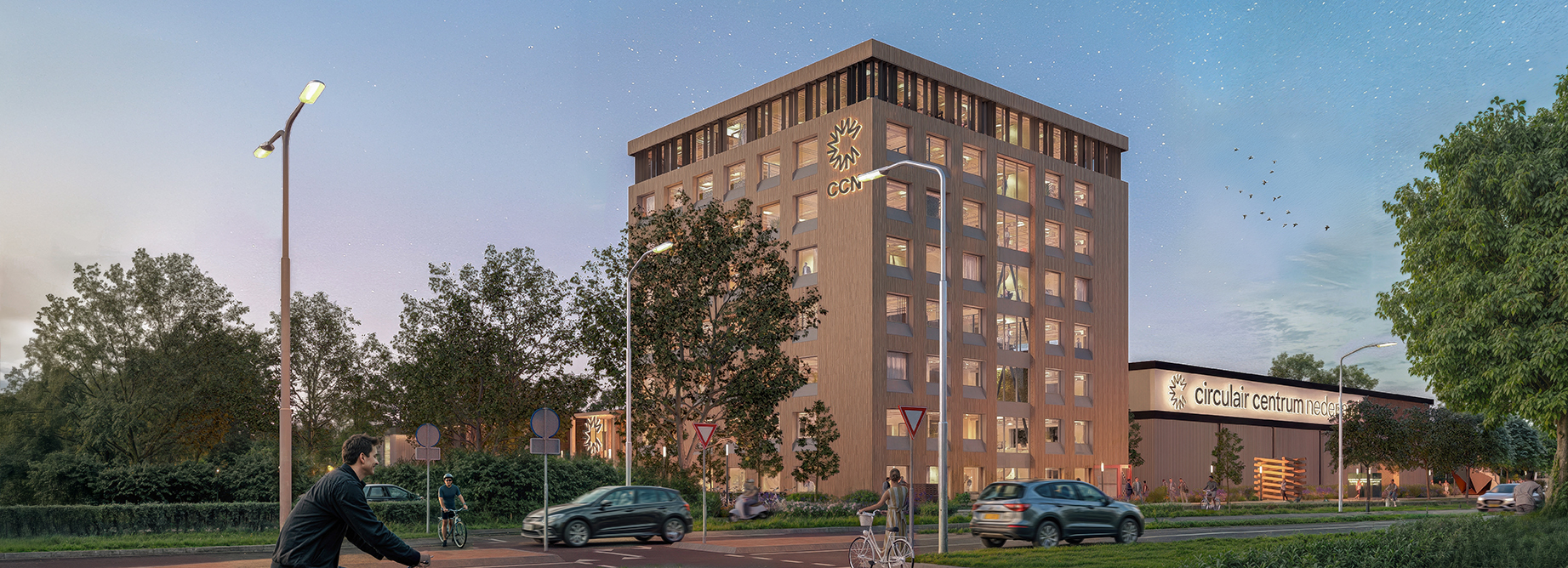
The finished centre will house offices, training rooms, start-up spaces, a central hall and a congress room for 150 people. The published impression shows a compact tower next to a long, low hall. The permit was celebrated on 12 November, with congratulations from Gelderland deputy Helga Witjes. Even the room where the guests met was built from reused materials that will later move into the new building.
What Comes Next
With the permit in hand, Lagemaat and CCN are preparing to build. The centre is meant to show that building with existing elements can work at scale, and the lessons from the mock-up and the slab tests are being shared through trade publications and the partner network. Comparable donor-material strategies appear in projects such as the Krimpenerwaard town hall.
Source & images: Circulair Centrum Nederland, CCN on digital product passports , CCN in Cement, cepezed