Search
10 results for “coffee grounds” in materials
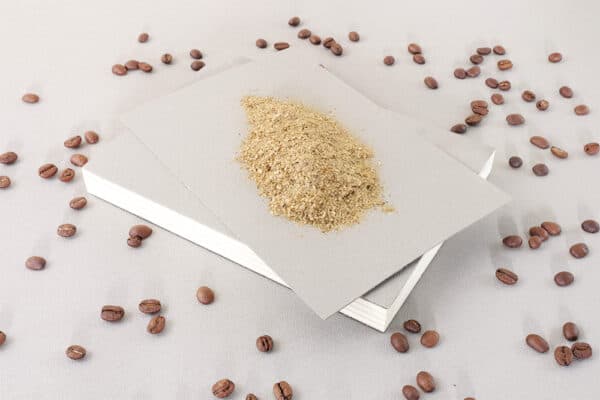
- Cafea SilverskinCoffee Based developed a bio-based granule consisting of silverskin and a biopolymer. The silverskin separates from the coffee bean during the roasting process. To prevent this valuable material from going to waste, Coffee Based recycles them into bio-based granules which are lighter in colour than the coffee grounds materials.
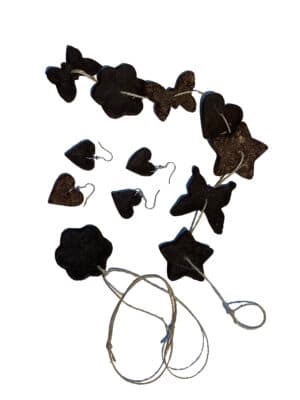
- Arabica Black (food safe)Coffee Based developed 3 different bio-based granules consisting of coffee grounds and a biopolymer. From coffee cups and notebook covers to plant pots and coffee panels, the ‘Arabica Black’ coffee granules are suitable for many product applications.
- Touch of Nature, walking on CoffeeCoffee grounds get a new lease of life for another 20 years as a seamless floor when mixed into a bio-based resin that can be processed at room temperature. The bio based resin is based on lin seed oil, and other fillers like fruit residues. This seamless floors comes in a matte finish and has a closed and resilient surface.
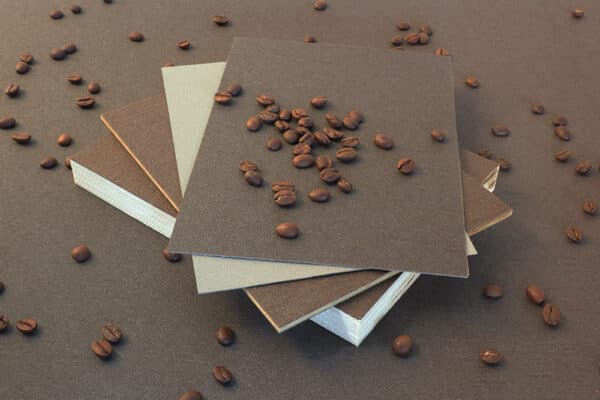
- Coffee PanelsThese coffee panels are composite materials produced from coffee grounds and a biopolymer, polyactic acid or polylactide (PLA). Due to the characteristics of the materials used, these coffee composites have similar properties to MDF and may be machined by various techniques such as CNC, acquiring numerous forms and geometries reliefs. Coffee PLA composites are 100% biodegradable.
- Coffee polymerCoffee polymer is a material consisting of 30% coffee grounds and 70 other biobased raw materials. The Espresso Polymer is dishwasher-proof and biodegrades only in controlled circumstances. The Cappuccino Polymer is fully biodegradable in natural circumstances in about one year. The Americano Polymer biodegrades in about two months.
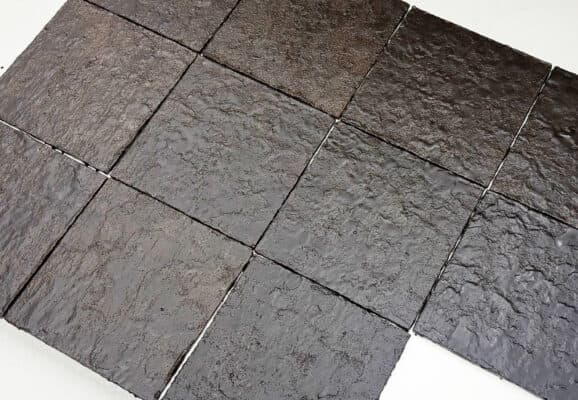
- Coffee Waste TilesCoffee Waste Tiles are made from locally collected coffee grounds bound with natural bio-resins. The material celebrates the tactile warmth and depth of roasted coffee, evoking sensory and visual connection to its origin. Each tile is handcrafted, with variations in tone and surface revealing the natural irregularities of the material.
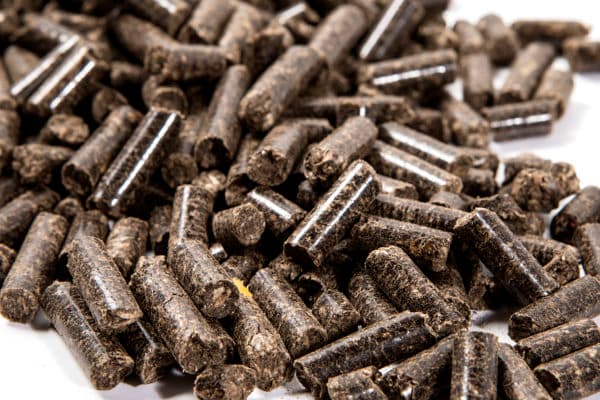
- Coffee to Burn pelletsCoffee to Burn pellets are pellets made from waste materials: coffee grounds and sawdust (collected at companies and sawmills). The coffee grounds are dried and mixed with the sawdust, before they are pressed into pellets. The pellets have a higher caloric value than ordinary pellets, emitting more heat, and contain 25 % more energy than other pellets, saving fuel and decreasing CO2 emissions.
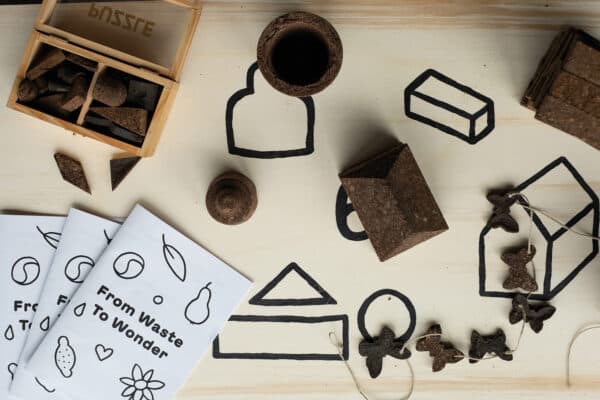
- Coffee Composite 1This is a mouldable biobased material made from spent coffee grounds, coffee husk, potato starch, glycerine and water. This recipe makes it easy to create 3D shapes that hold their form well. It is pressed into 3D printed moulds and dried using a dehydrator.
- Coffee Composite 2This material is a sturdy, biobased mixture made entirely from organic waste such as spent coffee grounds, casein – a milk protein and water. It is pressed into moulds and dried using a dehydrator, without any chemical additives. The result is a strong, natural sheet material, perfect for creating flat (2D) shapes.
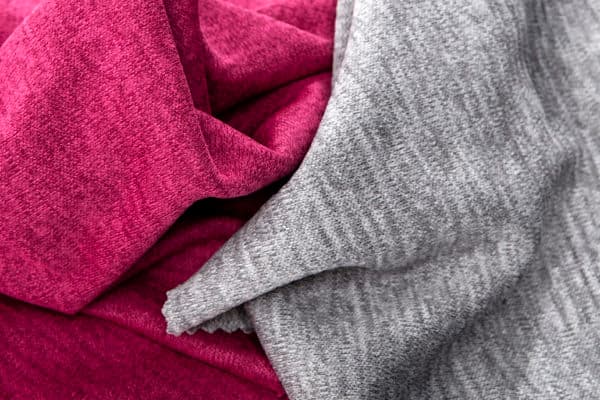
- S.Café coffee fabricS.Café is made from a combination of coffee grounds and polyester. In a low-temperature, high-pressure and energy saving process, the coffee grounds are combined with the polyester yarn surface, changing the characteristics of the filament and adding properties like fast-drying, UV-protection and odour control.