Search
4 results for “resin” in materials
- Rícino resin (castor oil based)Rícino resin is a plant-based polymer derived from castor oil (Ricinus communis), a material developed at the University of São Paulo, Brazil. The material's properties, such as its physico-chemical stability, elasticity and ability to adhere to porous materials, make it a very efficient sustainable substitute for petroleum derivatives.
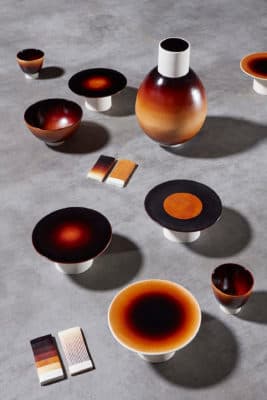
- Ott (natural resin, lacquer) porcelainGlazed ceramic pieces are not recyclable for their re-production and they mostly end up in a landfill. Seok-hyeon Yoon searched for alternative glazings and found out “Ott” known as Korean traditional lacquering material. It’s a natural resin from the Ott tree and was widely used as glazing for woodenware in the past. To glaze Ott on the ceramic surface, it doesn’t need to be baked as it just drys out.
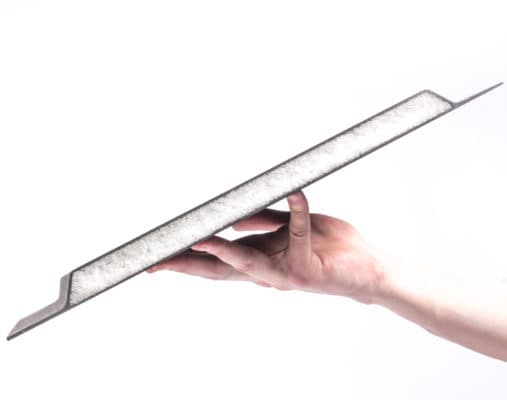
- Textile/resin compositeThis composite material consists of glass fibre reinforced polypropylene pultrusions applied as warp in a fabric with thin black fibres as weft. By heating and compression moulding this fabric, flat or curved panels are manufactured with a relatively high strength and stiffness.
- Plantics bioresin compositesPlantics is the developer and owner of a unique new family of circular biobased thermoset resins and materials. The resins can be used as a binder in composites and wood panels, and as a basis for coatings and foams. When the resin is combined with (natural) fibrous materials it creates a wood-like composite product.