Search
19 results for “carbon fibres” in materials
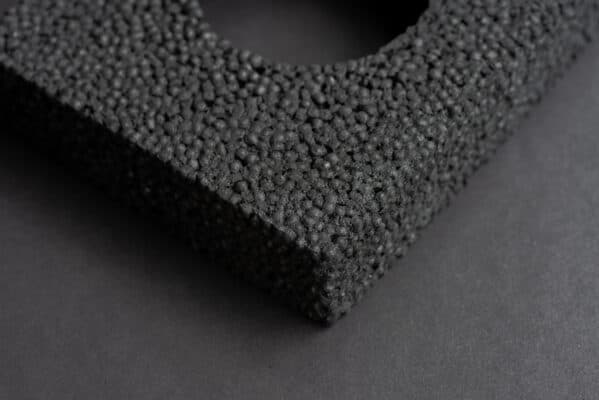
- Carbon Cell FoamCarbon Cell provides an alternative to polymer-based foams, with a patent pending, plastic-free foam made with carbon-negative biochar. This foam can be expanded using heat, either in moulds, or extruded profiles, enabling rapid production. It can be machined and cut using CNC and other common tools.
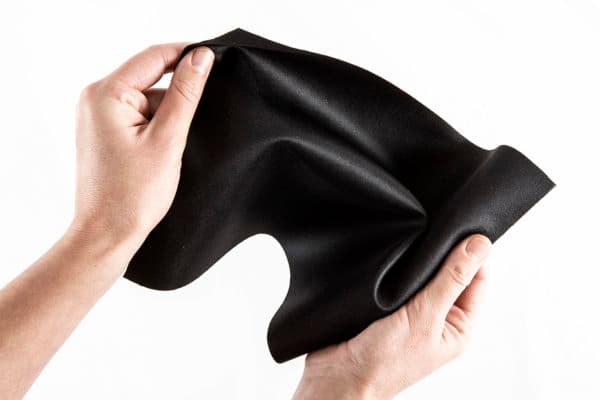
- Flexzorb activated carbon clothFlexzorb is 100% activated carbon cloth and is more effective at adsorption compared to other carbon loaded materials which have a lower activated carbon content. The material is available in woven and knitted formats and can also be tailored by activity levels, weights and thicknesses. In addition value added composites can be created by laminating to other materials or impregnating with chemical treatments.
- Upcycled Carbon BlackThis carbon black is made entirely of recycled tires and can be used as a pigment in polymers, ink, tires or paints. Black Bear carbon blacks are nothing less than a full replacement in all master batch and adhesive applications. Yielding a particularly high wetness and tinting strength, this is an eco-friendly, full replacement carbon black for the industry’s tinting and full-tone applications.
- Bamboo fibresBamboo fibres have a high potential. Based on its density, its capacity to grow fast, its low carbon footprint and its mechanical properties, there are interesting business cases to grow bamboo locally and use it at a larger scale.This triggered Bambooder and its business partners to explore market opportunities for bamboo, especially for paint, composites, bioplastics, and 3D printing.
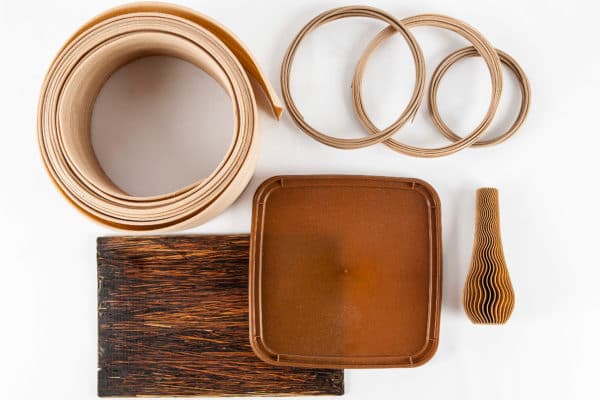
- Duranova™Duranova™ is a wood fibre-based material developed by Finnish materials innovation company Fiberdom. The material is produced using a patented process that functionalises sustainably sourced wood fibres to create a high-performance alternative to conventional plastic and coated fibre products.
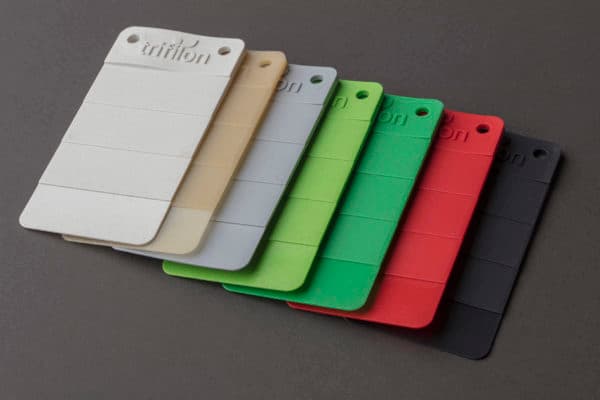
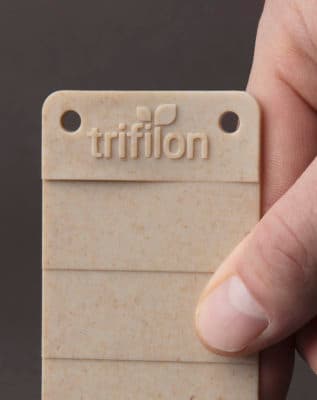
- Trifilon BTrifilon B is a biocomposite material combining food-safe polypropylene (PP) with up to 35% natural fibres. Developed by Swedish material company Trifilon, it is designed as a lower-impact alternative to conventional polypropylene for injection-moulded products, including applications involving food contact and products for children.
- Trifilon RTrifilon R is a recycled biocomposite that combines high-grade recycled polypropylene with natural fibres such as hemp and wood-derived cellulose. Developed by Swedish material company Trifilon, the material is designed to reduce the use of virgin fossil resources while retaining the processing and mechanical characteristics required for demanding injection-moulded products.
- Textile/resin compositeThis composite material consists of glass fibre reinforced polypropylene pultrusions applied as warp in a fabric with thin black fibres as weft. By heating and compression moulding this fabric, flat or curved panels are manufactured with a relatively high strength and stiffness.
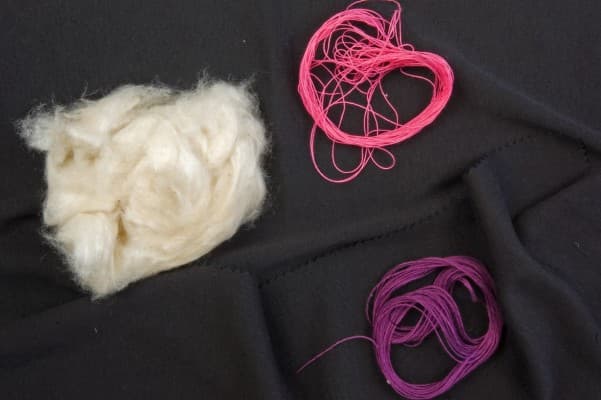
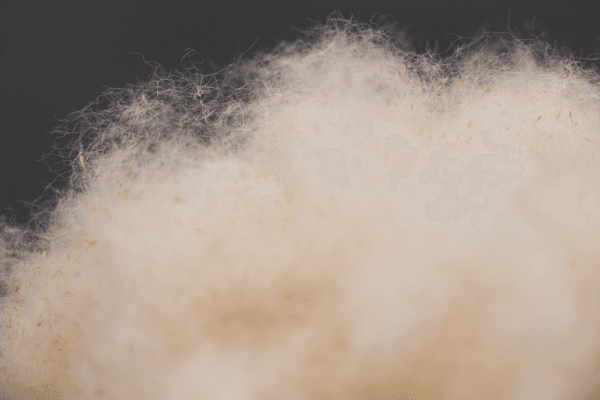
- PiumafilPiumafil is made out of 85% cotton and 15% kapok fibre.It is ultra lightweight and has good temperature regulation properties. The fibre is coated with a natural water repellent wax and absorbs almost no humidity.
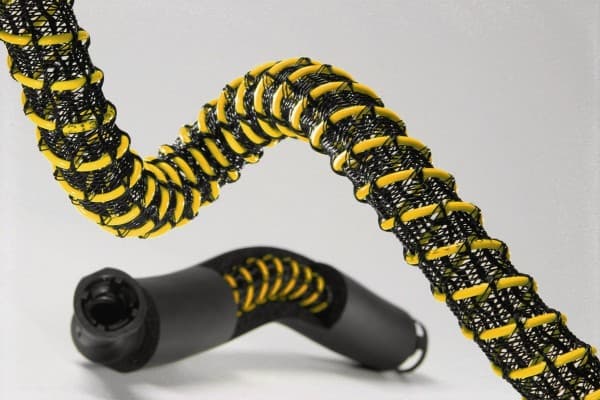
- LangotecLangotec is made of c-glass, e-glass, aramide, silicate and carbon. It can be produced in dimensionally-stable sleeves and tapes. Lango®tube is a braided and woven sleeve for various reinforcement and insulation applications.
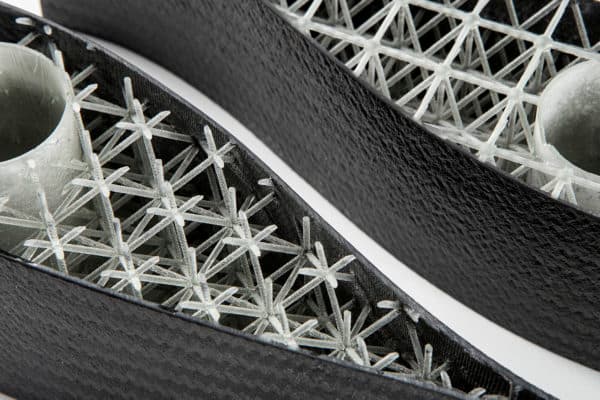
- 3D printed customised compositesFiberneering is a manufacturer of 3D printed fibre reinforced composite parts. They create customised strong and lightweight products in almost any shape. The company offers freedom in design, and possibilities for structural applications as well as prototypes. Fully functional carbon or glass fibre reinforced parts can be produced in almost any shape or form.
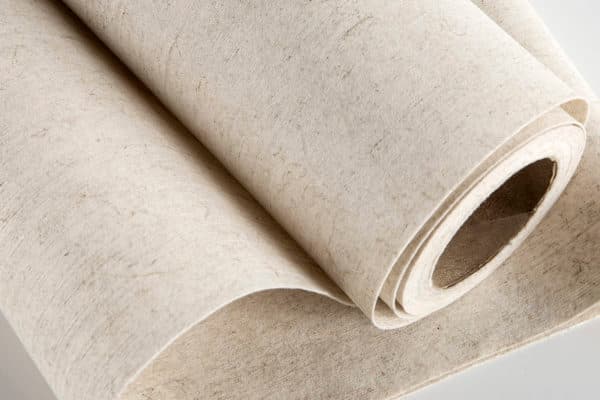
- Flax wallpaperFlax offers the opportunity to produce nonwovens with outstanding properties such as extreme tear-resistance, durability, and robustness at a relatively low production cost. This wallpaper high tear-and UV-resistance, a soft touch, as well as good insulating properties. It does not require a supporting material and can be applied directly to the wall with the specially developed glue for flax wallpaper.
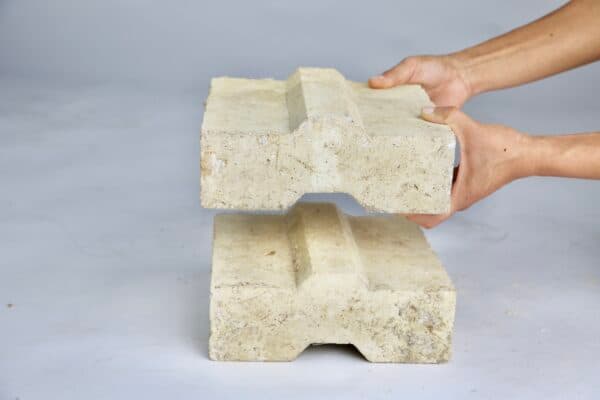
- Sugarcrete®Sugarcrete® provides a low-carbon alternative to bricks and concrete blockwork developed by the University of East London (UEL). The material combines sugarcane fibres left over after sugar production, with sand-mineral binders to produce bricks that have a carbon footprint six times smaller than traditionally made clay bricks.
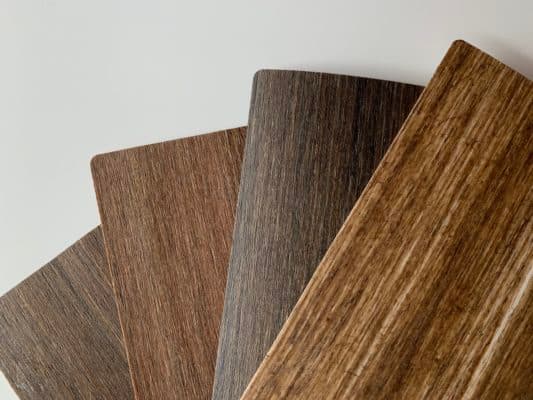
- Ekoa®Ekoa® is a high-performance, clean-air plant-based composite that can replace wood, plastics, and laminates in all interior applications – from dashboards to floors, to furniture, and so on – with a cost-competitive, carbon-negative, clean product that delivers a higher strength-to-weight ratio than steel. Ekoa® is crafted of natural fibres and plant resins for strong, elegant surfaces with the best air quality and lowest carbon footprint.
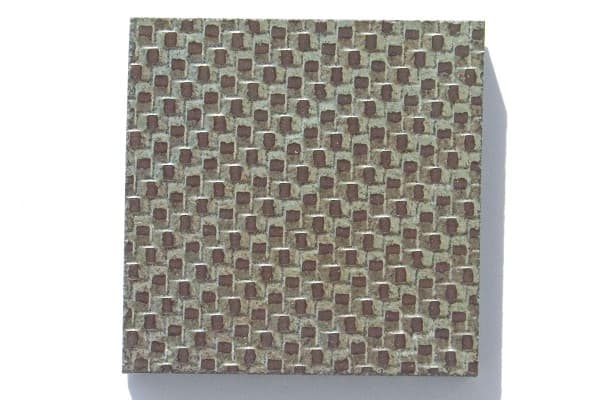
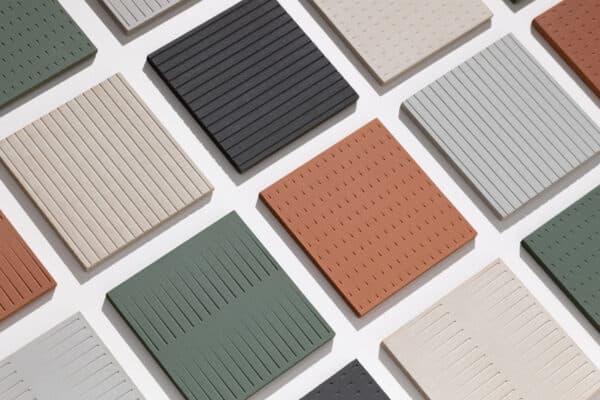
- Tau CarbonoThe Carbono serie; TAU CerÁ mica drew inspiration from the effect and texture of carbon fibre. Like the material on which it is modelled, Carbono generates tiny geometric glints and shimmers, giving microtextures on porcelain tiles.
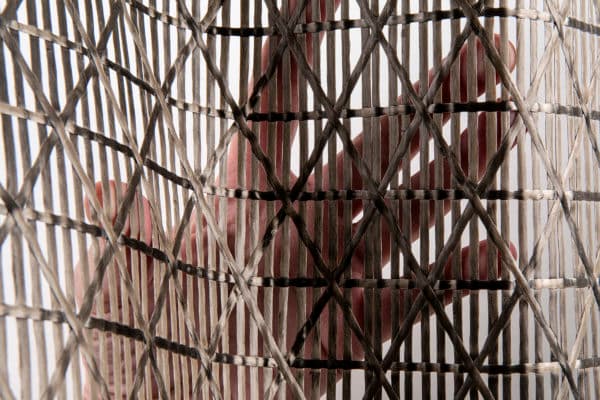
- I-MeshI-Mesh is the result of a study on composite materials in the nautical and aerospace environment. The yarns are carbon fiber, fiberglass, zylon, technora or basalt. It is 6/7 times stronger than metal, sustainable, recyclable, noise-absorbing, insulating, non-combustible, PVC free and it guarantees energy saving.
- Ponda BioPuff®Ponda BioPuff® is a bio-based insulation material designed to offer high thermal performance while contributing to environmental restoration. It is composed of 60% Typha fibre and 40% recycled polyester, with a manufacturing process that prioritises sustainability and traceability. Typha is a plant cultivated on regenerated wetlands.
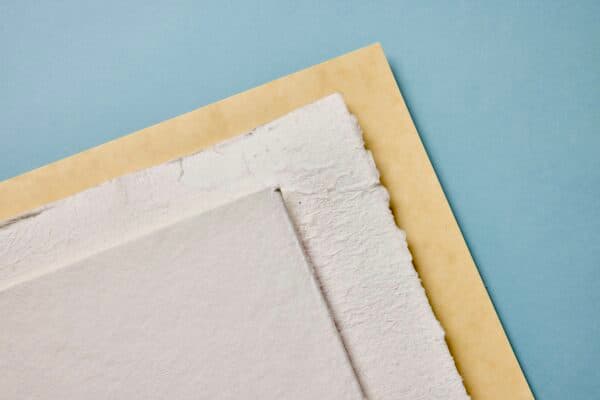
- Paper Waste PanelPaper Waste Panels are an innovative interior finishing material crafted from repurposed industrial fibre waste. They are made primarily from cellulose fibres that have…
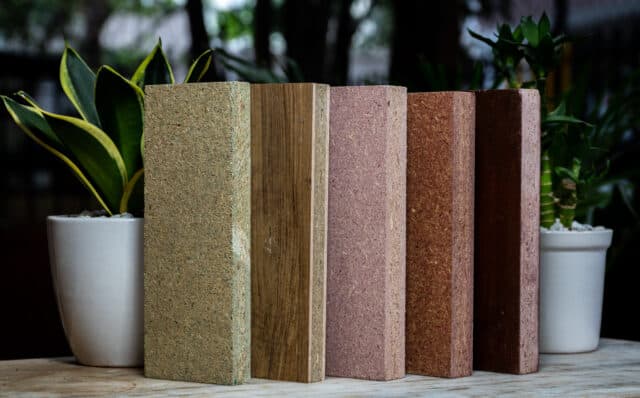
- AgribiopanelAgribiopanels are 100% Cradle-to-Gate carbon negative building material made of 96% biomass. Used for various applications for all applications in building interiors, such as partition walls, ceilings, flooring, acoustic insulation and furniture.