Search
30 results for “injection moulding” in materials
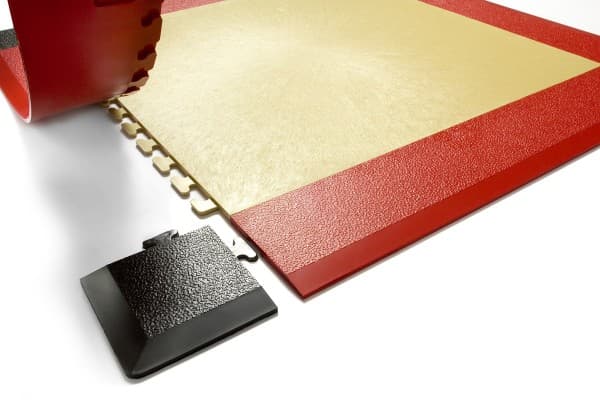
- WALA-Eco-ClipThe WALA Eco-Clip tiles consist of phthalate free PVC. It is robust, waterproof, heat insulating, flame resistant, sound absorbing and joint friendly. It is suitable for floating laying and even welding is possible.
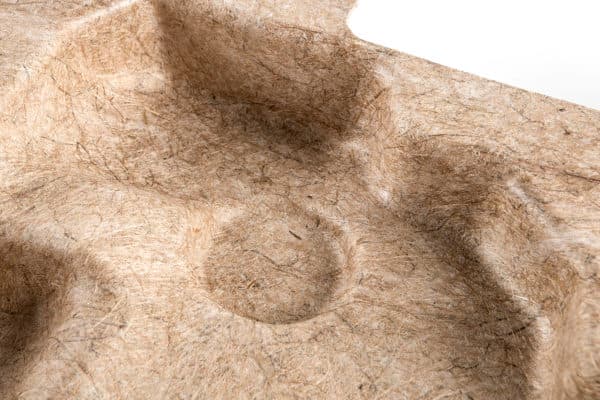
- Press mouldingsNatural fibre moulded parts are produced by high pressure moulding on the basis of a prepreg (a nonwoven fabric impregnated with thermosetting binder). The natural fibres used come from fast growing plants such as flax, hemp, or kenaf. By means of a high-precision and non-contact pressing process, the prepreg is thoroughly warmed and formed in one cycle.
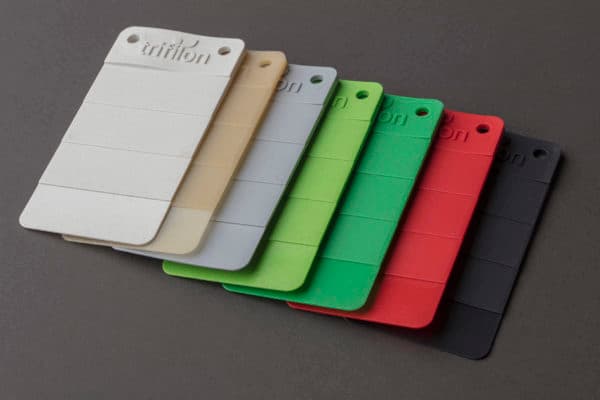
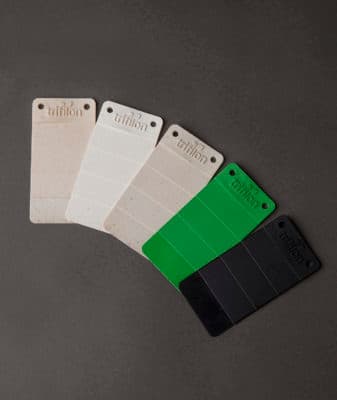
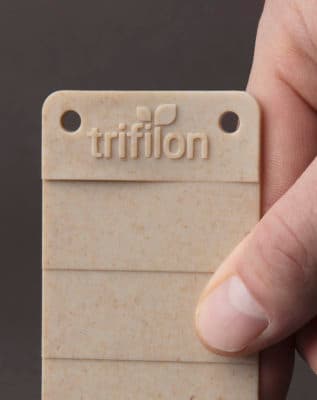
- Trifilon BTrifilon B is a biocomposite material combining food-safe polypropylene (PP) with up to 35% natural fibres. Developed by Swedish material company Trifilon, it is designed as a lower-impact alternative to conventional polypropylene for injection-moulded products, including applications involving food contact and products for children.
- Trifilon STrifilon S is a renewable thermoplastic biocomposite developed by Swedish material company Trifilon. Combining bio-based polyesters with natural fibres, the material is designed as a lower-impact alternative to conventional fossil-based plastics for injection-moulded products. Depending on the grade, Trifilon S can be up to 90% fossil-free.
- Trifilon RTrifilon R is a recycled biocomposite that combines high-grade recycled polypropylene with natural fibres such as hemp and wood-derived cellulose. Developed by Swedish material company Trifilon, the material is designed to reduce the use of virgin fossil resources while retaining the processing and mechanical characteristics required for demanding injection-moulded products.
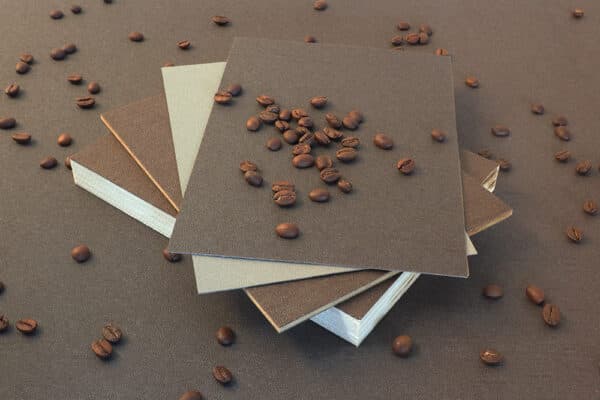
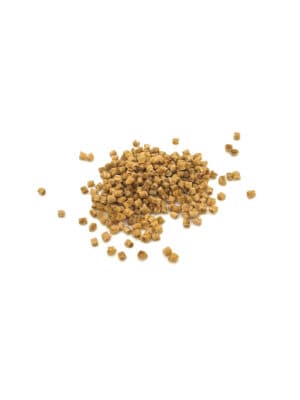
- Arabica Black (food safe)Coffee Based developed 3 different bio-based granules consisting of coffee grounds and a biopolymer. From coffee cups and notebook covers to plant pots and coffee panels, the ‘Arabica Black’ coffee granules are suitable for many product applications.
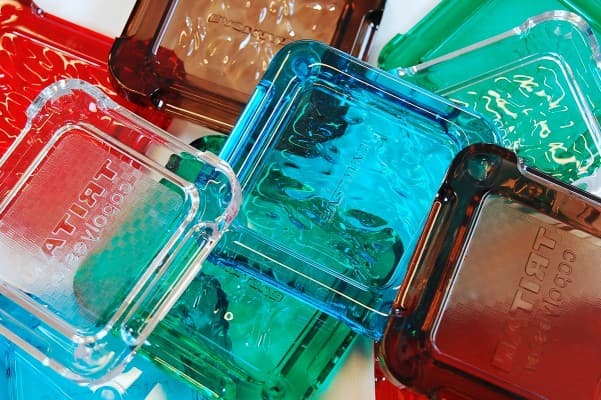
- Tritan copolyesterA copolyester that offers advantages, such as clarity, toughness, heat resistance, chemical resistance, dishwasher safe and which is BPA free. It can be converted by injection molding, injection blow moulding and extrusion blow moulding. Due to low UV-resistance, the material does not fit for outdoor markets.
- TreeplastTreeplast is a fully renewable and biodegradable composite based on wood. Despite containing no plastic, Treeplast is injection mouldable and can be processed to create objects with no shape restrictions. Treeplast is skin-friendly, non-electrostatic, lightweight, shock absorbing and available in a number of colours.
- BiogradeBiodegradable plastics for injection moulding. It does not contain starch or starch derivates. Properties are comparable to polystyrene: rigid and transparent depending on grade.
- SolanylSolanyl is a smart series of biobased and biodegradable end compounds mainly based on reclaimed side stream starch from potato processing, industry grain, root, seed and/or flour based resources. It is a renewable and biodegradable substitute for plastic.
- Photopia AQ InkOrganic photochromic colourant that changes colour reversibly and repeatedly. Available in three reversible colours: yellow, purple and blue. The colours are activated when exposed to the sun or other ultraviolet light sources and then change from clear to colour and change back when the ultraviolet light source is removed.
- Novijec™ – PLM20100% bio-sourced material (zero petrochemicals in the recipe), intended for injection moulding, with a PLA base loaded with Miscanthus plant fibers, grown and made in France. The plant fibres are visible on the surface of the objects, bringing a golden note, without adjuvant.
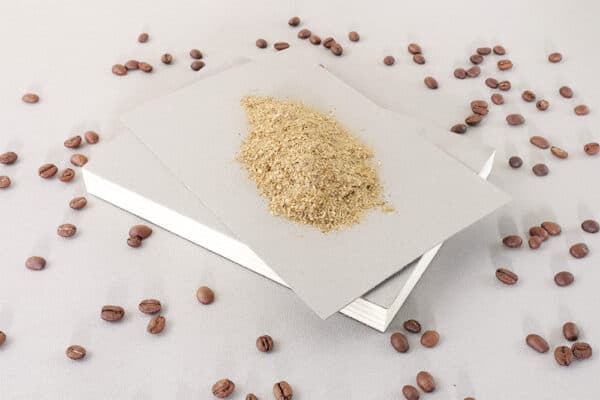
- Cafea SilverskinCoffee Based developed a bio-based granule consisting of silverskin and a biopolymer. The silverskin separates from the coffee bean during the roasting process. To prevent this valuable material from going to waste, Coffee Based recycles them into bio-based granules which are lighter in colour than the coffee grounds materials.
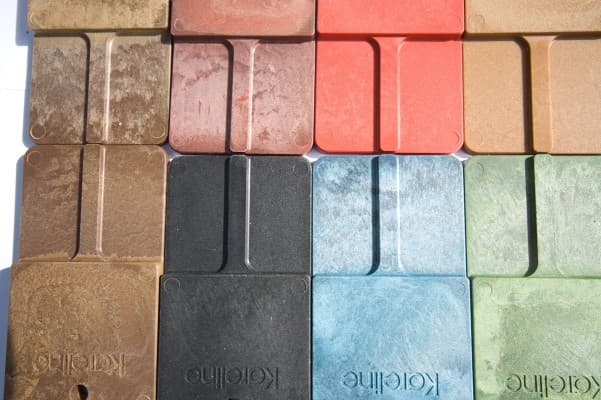
- KarelineThis material is a third generation natural fiber composite. Via a innovative process it combine’s the properties of natural fibres and plastics. The materials offers new possibilities to manufacture environmentally friendly injection molding or extrusion molding composite products that comply with all environmental requirements.
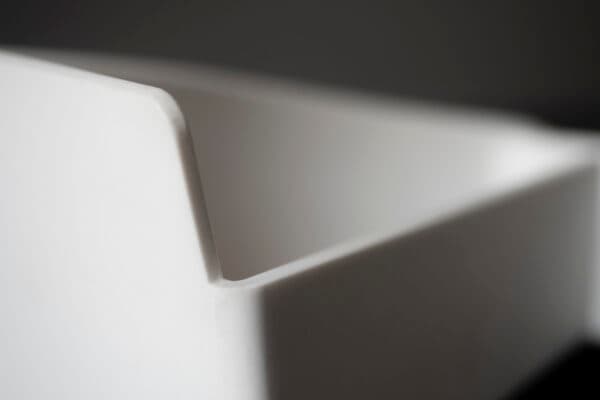
- Arfinio®This solid surface technology from Covestro and Arcesso Dynamics enables seamless solid surfaces and brings impossible designs to life. Its high degree of scalability makes creating even complex shapes easy. Being truly seamless, Arfinio® has no joints or structural weak points.
- NuatanNuatan is a 100% biobased, biocompatible and biodegradable plastic. The material is petroleum free, and consists of cornstarch, sugar and cooking oil. Essentially, it’s a blend of two biopolymers, Polyacid Acid (PLA) and Polyhydroxybutyrate (PHB). The material can be formed by injection moulding and 3D printing, biodegrades in 90 days in an industrial composter and is safe to eat.
- ArcBiox BGF30-A1 and ArcBiox A17ArcBiox BGF30-A1 is a composite material with 30% of biodegradable glass fibre as reinforcement. The material is designed for injection moulding. ArcBiox A17 is impact modified PLA based material. The material is not reinforced with fibres. It is a good alternative to replace ABS.
- Bio-Thermoplastic elastomerDryflex Green is a family of thermoplastic elastomer (TPE) compounds containing raw materials from renewable resources such as plant and vegetable crops. The series consists of various types of bioplastic, with amounts of renewable content to over 90% (ASTM D 6866) with hardnesses from 20 Shore A to 50 Shore D. The material has properties comparable to TPE from fossil based raw materials.
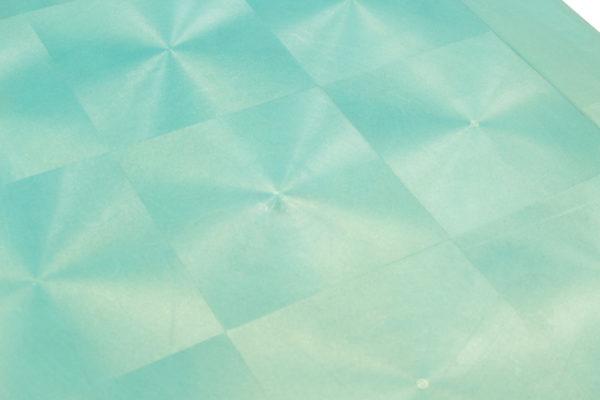
- LenstileLenstile is an injection moulded polyurethane tile and has a shallow relief which produces a mobile optical effect. The tiles feel soft and warm to the touch and can be plastically deformed. The combined effect of pearlescent pigments, texture and colours is one of striking lustre and sensuality.
- PurePURE is a 100% polypropylene, self-reinforced composite material. Available as a tape, fabric or sheet, it can be used to mould and create numerous components in variety of sectors including the automotive, consumer products and construction industries. It is additionally used as a reinforcement material in anti-ballistic applications.
- ArboformArboform is made from 100% renewable raw materials and is mainly used for injection moulded wood applications. It enables the wood processing industry to make products with design geometries that were previously cost-feasible in plastics only.
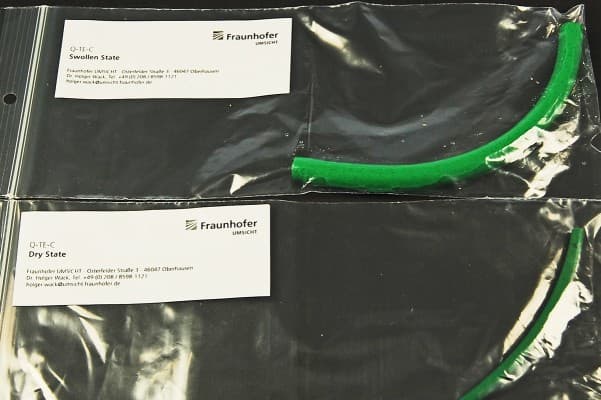
- Q-TE-CQ-TE-C is a swellable polymer for sealing purposes. The material can be designed to the special needs of the customers. Tailormade profiles are possible as well as injection moulded products or foils. The material can be delivered in different colours and sizes.
- ArboSkinA thermoformable bio-plastic. The free-formable material is made from renewable sources. It also contains minerals for UV-protection. It is produced as bio-plastic granules, which are extruded into sheets for exterior use.
- UPM FormiUPM ForMi is a biocomposite, made of 20% - 50% wood-based cellulose and 80% - 50% polypropylene or similar matrix. Next generation material which can be injection moulded with existing machinery. It is recyclable, odourless and has a constant material quality. Its carbon footprint is between 30% to 60% lower than that of other common engineering plastics such as PC and ABS.