Search
16 results for “timber” in materials
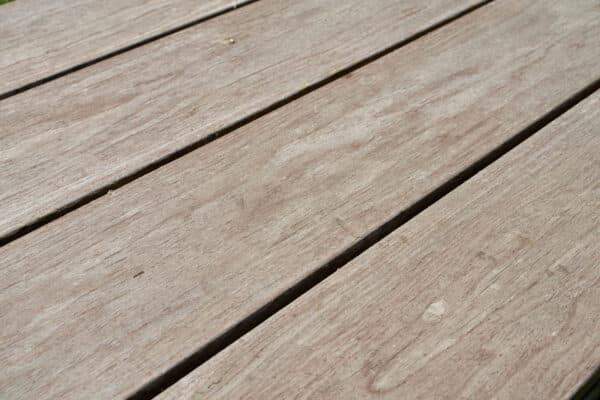
- PopuraWith Popura Clickwood on Grad, Awood introduces an innovative biobased material for façade and decking applications. Popura is made from fast growing (10–20 years old) poplar wood and undergoes a unique process: the log is first peeled into veneer, after which a bio-modification is applied to enhance strength, stability, and durability.
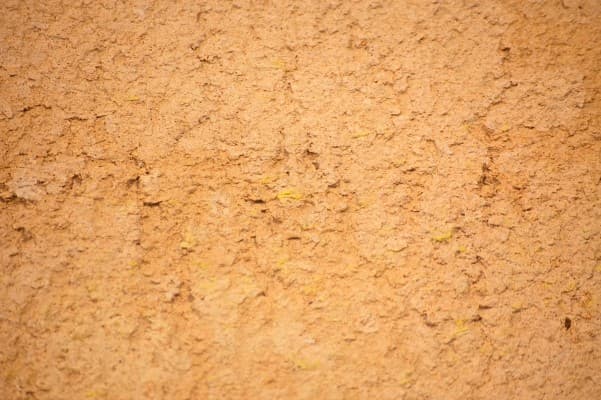
- TimbercreteTimbercrete contains more than 50% by volume of recycled sawmill waste. Timbercrete homes consume less energy for heating/cooling. Timbercrete acts as a “carbon sink” preventing the release of carbon dioxide from decomposing sawdust into the atmosphere, thus reducing greenhouse gas omissions.
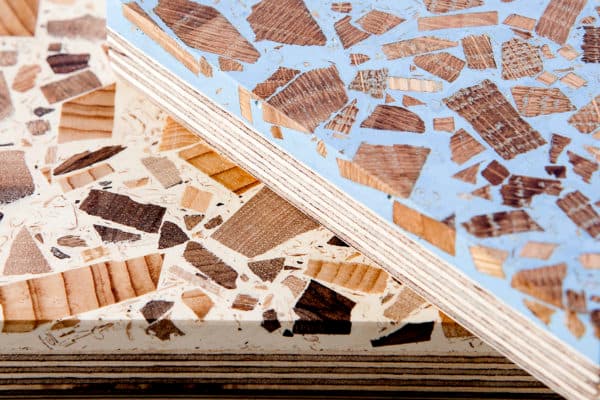
- Timber terrazzoForesso uses high quality FSC british timber that is unusable for joinery due to defects or odd sizing to create a versatile surface material. Conor Taylor tackled the technical hurdles of imbuing timber with the qualities of marble: crafting wood chips with a stone-like feel, optimising the proportion between timber and binder; ultimately ensuring that Foresso could be produced efficiently and at a large scale.
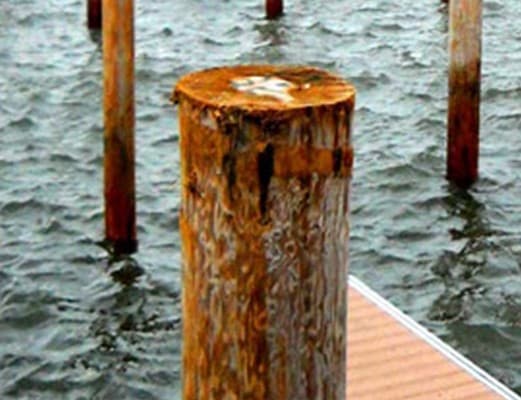
- Eucalyptus cloeziana timberWood Solutions offers plantation grown Eucalyptus wood types which can replace tropical hardwood species in a number of applications. Eucalyptus cloeziana timber has a natural durability Class 1. Field tests executed by an official Dutch Research Institute (SHR Timber Research) indicate that Cloeziana is resistant against shipworm (Teredo navalis). The timber has a yellow-brown colour with a straight grain and a fine texture. It dries easily, both in sawn and pole form, with little deformation. Pre-boring advisable before nailing.
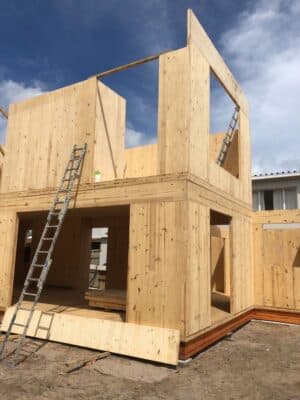
- Eucalyptus grandis Cross Laminated Timber (CLT)This engineered timber product is composed of Eucalyptus grandis planks that are finger-jointed, planed, and laminated into cross-laminated layers. Each layer is oriented perpendicular to the next, resulting in a structurally robust and dimensionally stable Cross-Laminated Timber (CLT) panel.
- Timber-SilTimberSIL® is a non-toxic fusion of two natural materials, wood and glass. It is natural product and a perma-nent combination of properties. By inserting a glass matrix around and within the wood fibers TimberSIL® offers the beauty of wood.
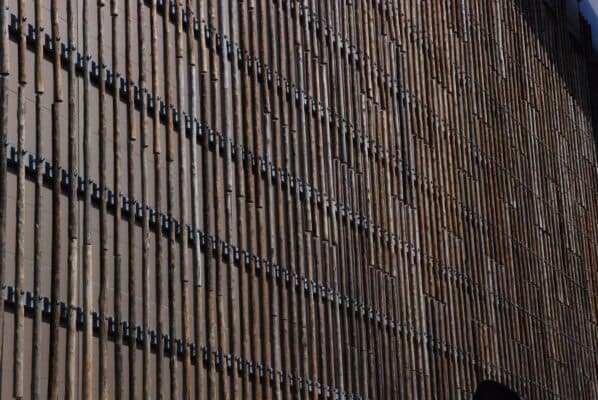
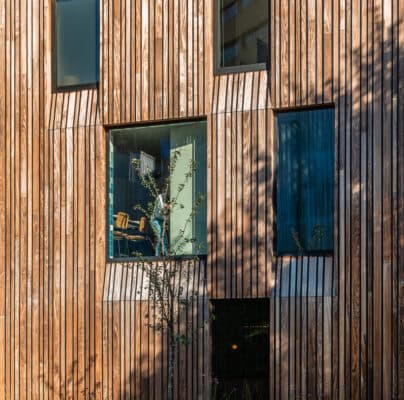
- Forestlines®Forestlines® by Paulussen Hardhout is a timber cladding material combining sustainably sourced hardwood with high-quality aluminium profiles. The timber, selected for its durability and dimensional stability, includes FSC-certified species and promotes biodiversity through the use of Lesser Known Timber Species (LKTS). The aluminium components feature a scratch-resistant coating certified to QUALICOAT Seaside standards, offering additional protection in coastal and industrial environments.
- SafeWood (Color)SafeWood® (Color) non-hygroscopic fire retardant wood products and sheet materials contribute to a higher safety level in buildings. When subjected to fire, the fire retardant ingredients react with the combustible gases and tars normally generated by untreated wood, and convert them to carbon char, carbon dioxide and water.
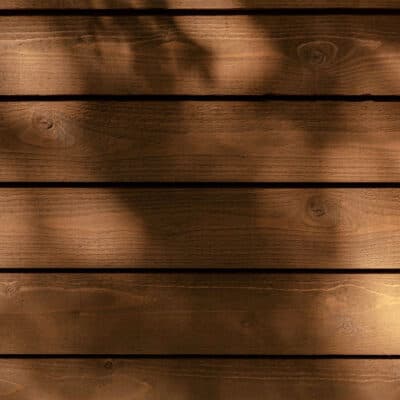
- Siberian larch WaxedWood CladdingWaxedWood is a very weather resistant wood, used for highly visible and decorative timbers. It is made of vacuum pressure treated Siberian Larch, which is impregnated with a water repellent additive for providing improved dimensional stability and increased protection against the elements.
- SuperwoodSuperwood® is a Danish company founded 25 years ago with the objective of developing a process capable of fully impregnating spruce timber. The production process is CO₂-neutral, partly due to energy-optimised manufacturing methods. Shown here is Superwood in a transparent colour finish, where the grain of the wood is more visible, and in a fully covered finish, which has a more sleek appearance.
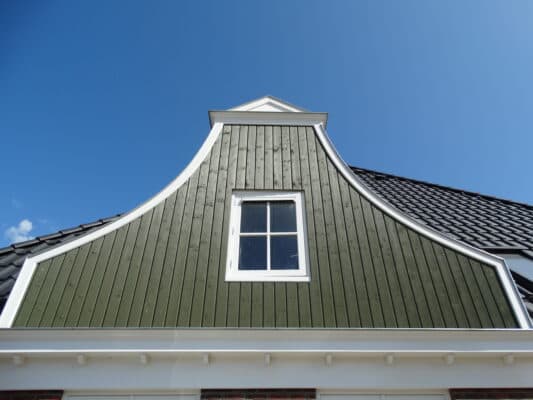
- Valtti Plus ColorValtti Plus Color is a water-based, semi-transparent exterior wood stain developed for the protection and finishing of timber surfaces. The product is designed to protect wood against UV radiation and moisture while allowing the natural grain structure to remain visible. The coating forms a vapour-permeable layer and penetrates into the wood, helping to reduce flaking and slow down fungal growth under varying weather conditions.
- Fire retardant coating system (exterior)This waterborne exterior coating system enhances fire safety for weather-exposed wooden façades, while offering long-term durability and colour customisation. Shown here is Douglas Fir Wood Exterior Cladding/Siding, finished with a waterborne Fire Retardant TEKNOS Exterior Opaque Paint System, which meets EU Class B-s2,d0 following EN13501-1.
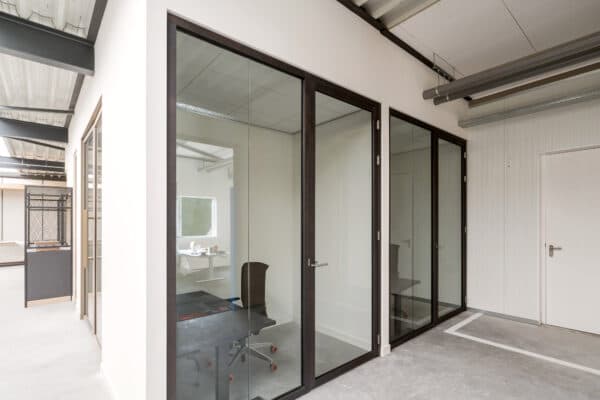
- WoodFrame Slim Reclaimed Meranti PostConsumerThe WoodFrame Slim Reclaimed Meranti is a glass partition system made from reclaimed meranti hardwood. This valuable material was often discarded or burned in the past but is now given a second life as a high-quality partition. After buildings are demolished, the meranti wood is carefully selected for quality, then cleaned and processed armt hand its original appearance.
- WaxedWood (Color)WaxedWood® Color provides extra protection against the effects of weathering for highly visible and decorative timbers. Based on a vacuum pressure treatment, timber is protected against wood decay. At the same time a mixture of wax is impregnated. This water repellent additive provides extra protection against moisture.
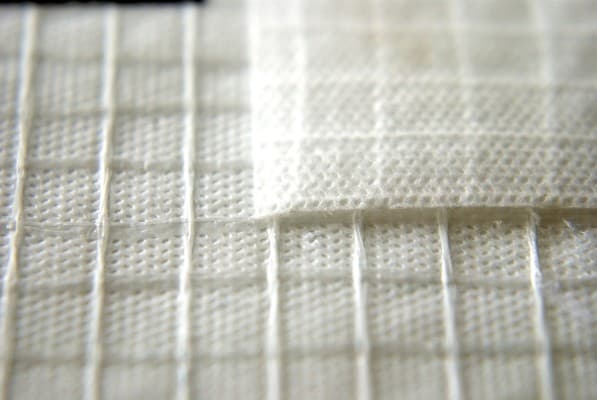
- Pro ClimaDB+ and the Intello Plus are both materials used for internal vapour checks/barriers. The first is made from cellulose, the second from polyethylene copolymer reinforced membrane. The two Solitex materials are designed for external use and protect timber frame structures. These materials offers a high vapour permeability are air & watertight.
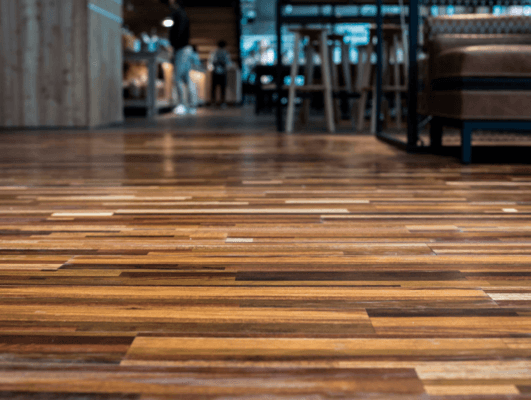
- No-Waste® FloorThe No-Waste® Floor was originally developed for the circular “Circl” pavilion of ABN AMRO in Amsterdam. The material composition is based on post-consumer wood, including reclaimed window frames, doors, staircases and former floorboards. Additional reclaimed sources, such as timber from demolished buildings or municipal recycling centres, may also be incorporated, depending on availability.