Search
28 results for “coconut” in materials
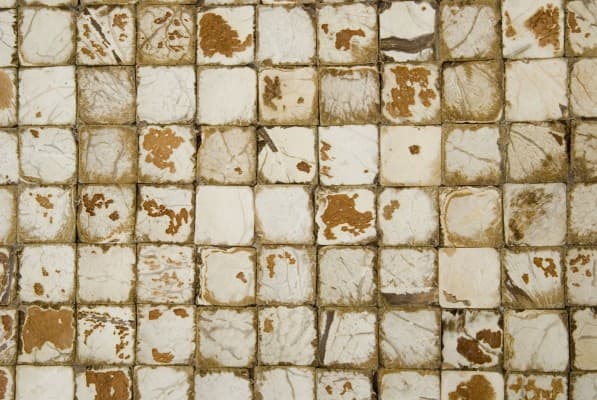
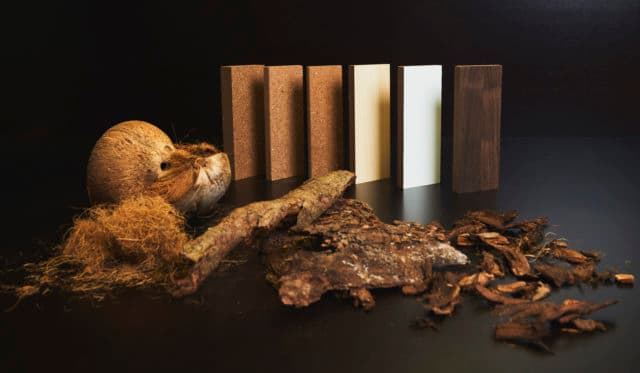
- Coconut TilesEkobe coconut tiles are made from Bahia coconut endocarp (hard coconut shell) using a patented process. It is a natural product which has no environmental impact. The fact that the coconut shell is made of approximately 50% lignin (natural resin), gives it great resistance to decomposition by micro-organisms and insect attack.
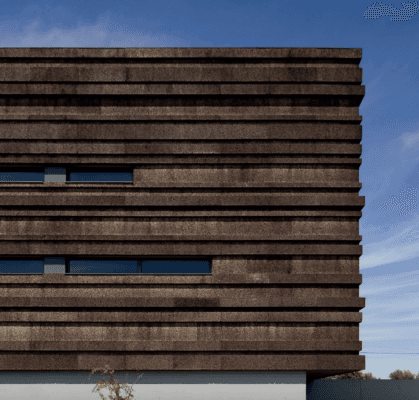
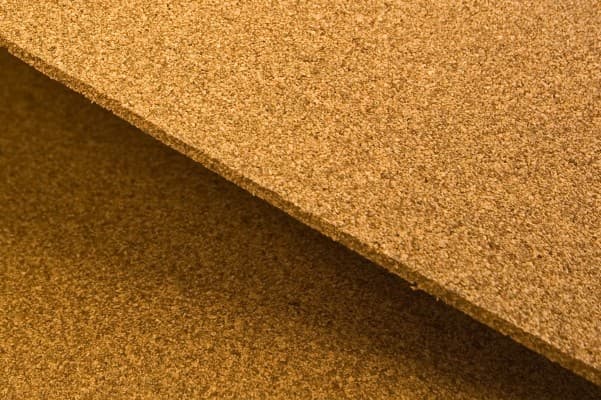
- Cork and Coconut InsulationQualycork supplies insulation products made from expanded cork and coconut fibres for thermal and acoustic applications in buildings. The materials are fully bio-based and derived from renewable natural resources. Expanded cork is produced from cork oak bark, harvested without damaging the tree. Coconut fibre insulation is derived from coconut husks and is primarily used for acoustic performance.
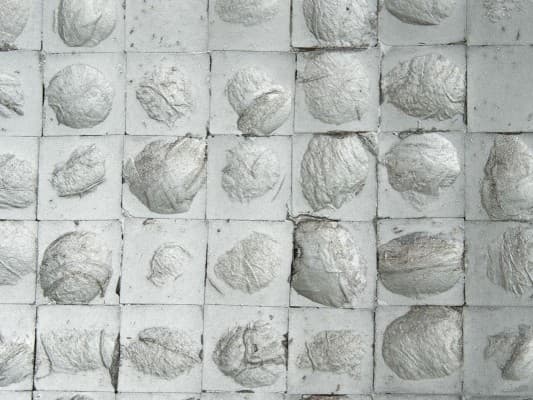
- Coconut mosaic panelsCoconut mosaic panels are handmade and eco-friendly wall coverings made from the post-consumer waste shells of Indonesian coconuts. Each panel is lightweight, durable and easy to install. These panels offer a 3D effect along with a warm and exotic look and feel. To make this material, coconut shells are cut into perfectly measured square pieces that are then glued together into larger panels in a tile format.
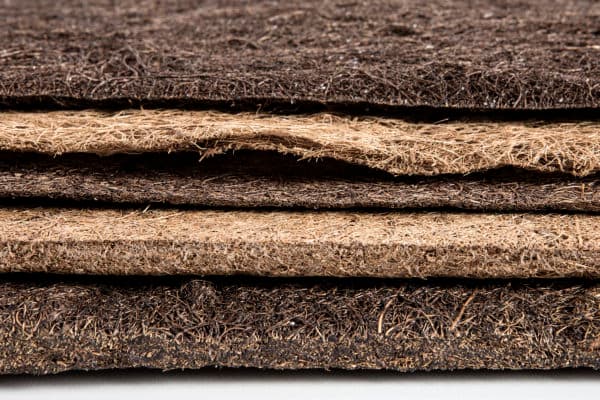
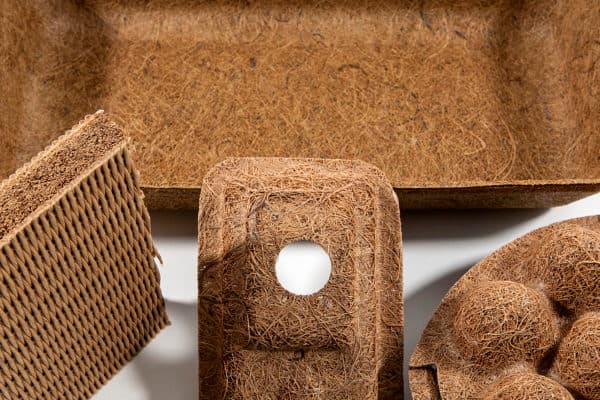
- Coquim coconut fibreCoquim is made from coconut fibre and natural latex, the sap of the rubber tree Hevea brasiliensis. The material is renewable and fully biodegradable. It can be used for a multitude of products, including pots, plates, and blankets. The material was initially developed to replace the popular Xaxim, also known as Dicksonia sellowiana, a fern plant native to the Atlantic Forest, which is used to make pots.
- Design Coconut TilesThese tiles are made from hard coconut shells using a patented processing method. The shells consist of about 50% lignin(natural vegetable resin), which gives it great resistance to decomposing or rotting and also insect attack. The surface revels the natural textures of the coconut shell, lighting up some spot light points due to the material’s irregularity.
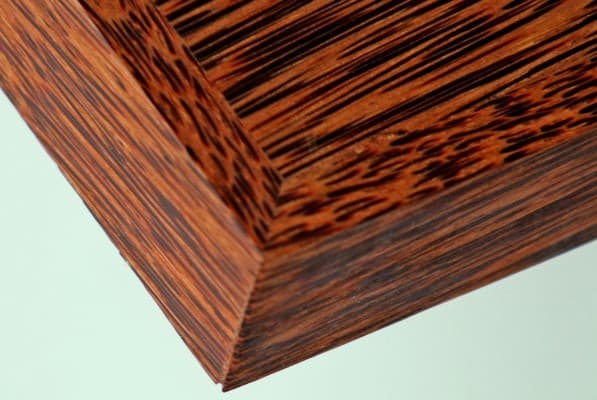
- PalmwoodPalmwood is one of the most durable wood types in the world. This coconut wood is a relatively hard, dark wood type with a unique grain structure and without growth rings.
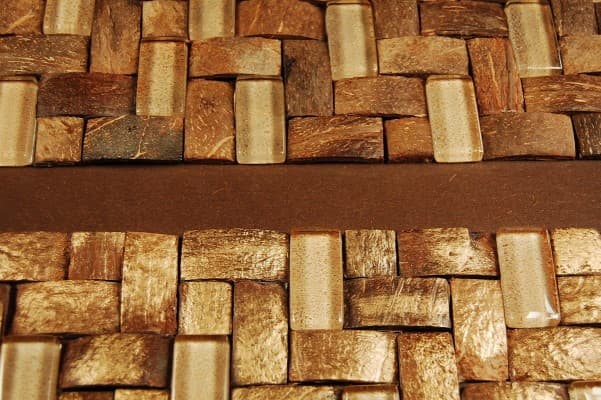
- BahiaNever imagined mixtures are now the great differential of the Bahia collection. Mosaic of Coconut skin and glass, coconut skin and wood and coconut and stone turn this line into a creative an innovative project.
- KayarKayar is a high-performance rubber flooring, made of a blend of synthetic and natural rubber with coconut fibres. designed by Sottsass Associati. It is obtained by adding fragments of natural coconut fibre to a mix of rubber.
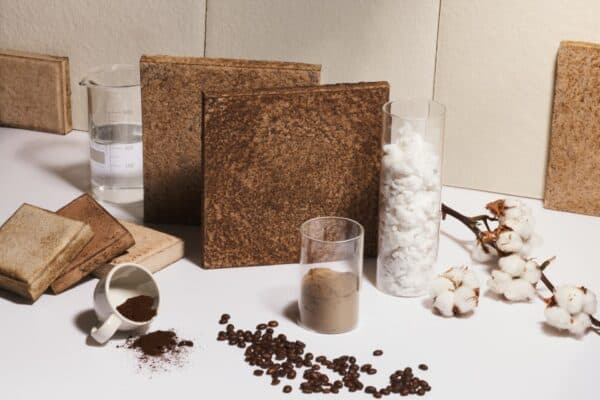
- Biobased Acoustic Materials from Organic ResiduesA series of acoustic tile developments explore the use of plant fibres and organic by-products as primary material components. The tiles are designed for interior applications and combine renewable fibres, residual biomass and mineral additives within composite systems intended to provide sound absorption and structural stability. The versions shown are seaweed and cotton, coffee, coconut fibres, jute, and grape pomace.
- Cocoboard©Cocoboard© is an innovative, bio-based panel made from coconut husks fibre and natural adhesives from tannin extracts. Aside from having low environmental footprint, it boasts superior properties such as moisture resistance, termite resistance, and low formaldehyde emissions.
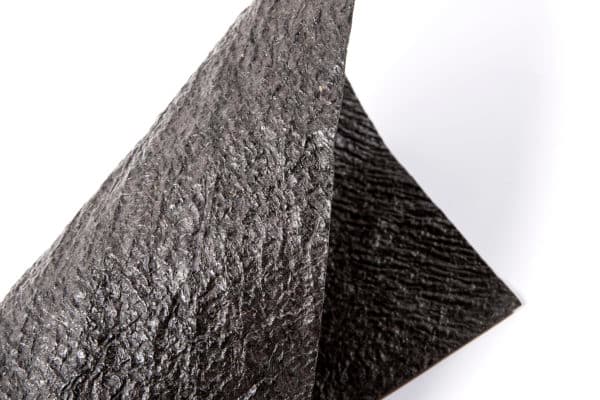
- Malai biocompositeMalai is a flexible, biocomposite material made from organic bacterial cellulose, grown on agricultural waste sourced from the coconut industry in Southern India. The material has a feel comparable to leather or paper. It is water resistant and certified vegan.
- Tongkonan Coco Evo BlissA new special material in this line with distinctive natural textures and colours is Evo Aqua Natural Bliss. Evo Aqua Natural Bliss tiles create a beautiful, natural glossiness. The tiles are made of stone washed 30mm x 30mm coconut pieces, the hollow side of which are used for production. The individual pieces are glued to a net backing without further finishing. Evo Aqua Natural Bliss tiles can be easily applied to curved walls. Only water-based lacquers, adhesives and paints are used in the production of Cocomosaic Special panels.
- CocoformA combination of 60% coir (coconut) fibres and 40% natural latex, this moldable fibrous composite offers easy formability of complex shapes with good dimensional stability. Both coir and natural latex materials are renewable, biodegradable and compostable. The fibers are removed from the coconut shell and formed into a mat of layers, between which latex rubber is injected. The sheets are then heat pressed.
- Omo Niha cocomosaicCocomosaic is a line of natural, handmade and eco-friendly wall coverings. Each panel is lightweight, durable and easy to install. Made from post-consumer coconut waste, these panels offer a 3D effect along with an irregular texture and natural shape.
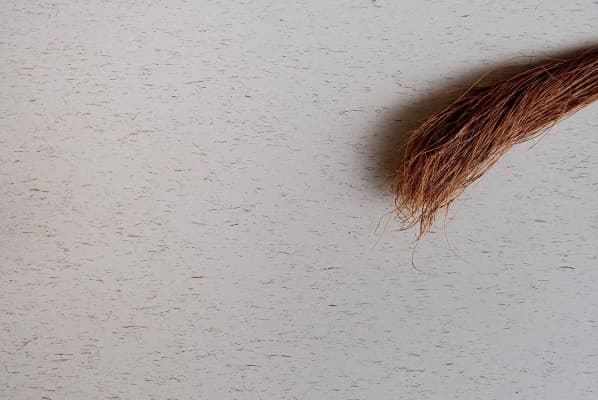
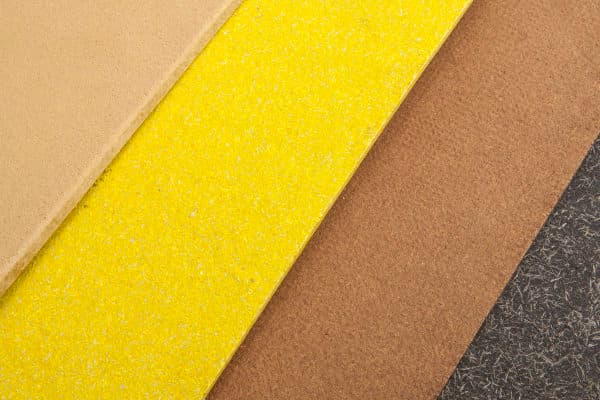
- ZelfoBlack/Light fibre flecks is made of sisal ('flume tow'). Mid Brown overall is made of coir (coconut ‘hair'). Golden brown overall is made of waste packaging fibre (post consumer waste) + Sawdust (post industrial residual). Yellow/White spots is made of cotton (industry residual) + Waste paper (Post consumer). It is designed as a laminate finish and has high wear characteristic.
- Natural FibresEnkev makes quality products from natural fibres. Their products are mainly used in the mattress, horticultural, automotive and filter industry. There are however many more possibilities for these fibres in packaging, insulation and in the shoe-industry.
- STRAWaveThis product is made of recycled agricultural natural fibres including straw fibres and coconut-fibres, combined by bio-resins. The natural fibres are combined separately with the bio-resins and cast in a custom-designed mould to achieve the final wave-form pattern needed. No pigments were applied, and the natural fibres’ original colours were applied as a main bio-design aspect within the final product’s output. The product can be used in non-structural facade cladding systems and interior-claddings.
- TRAshellThis prototype is a free-form shell of 300 x 300 x 2-5 mm, manufactured of green agro-fibre thermoset composites, of free-oriented short natural fibres like coconut shells, cereal straw and black coal ash as an agro- active filler and a plant-based thermoset bioresin. In addition, glowing additives were applied, to suit the possible application of the proposed product in exterior façade applications, for night lighting.
- Prambanam mahogany barkCocomosaic Special Panels are handmade, durable and easy to install. Made from post-consumer coconut waste, these panels offer a 3d effect with a warm and cozy look and feel, while the type of material used provides distinctive natural textures and surprising colours. The Wooden Bark series stands out with the use of mahogany bark material, characterized by a very rich, reddish brown colour. One of the two new specials in this series is Wooden Bark Large.Wooden Bark Large tiles are made of mahogany bark material cut into very small sticks glued to net backing, thus being easily applicable to curved walls. To finish they are protected against fungus and insects.
- Bcomp TextileThe most viable structural fibres used in these architectural textiles typically derive from specifically grown textile plants and fruit trees. Natural fibres are subdivided into bast fibres (flax, hemp and kenaf) and leaf fibres (sisal, pineapples and henequen), grass fibres (miscanthus), straw fibres (corn and wheat), seed fibres (cotton and capok), wood fibres (pinewood) and fruit fibres (coconut).
- CPC Cork Polymer compositeCork Polymer Composites (CPC) is a composition of 30% Cork flour, 30% Coconut fiber and 40% PVAc resin. This mixture is melt compounded and granulated and than consolidated under heat and mild pressure.
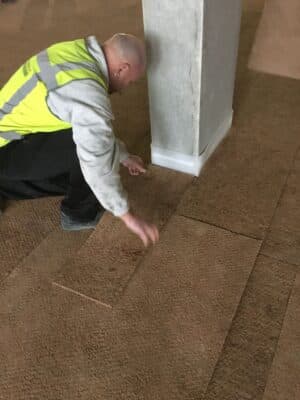
- Nevidek Kokos 300Nevidek Kokos 300 is a felt product made from 100% natural coconut fibres, with a natural latex layer on the surface to provide additional bonding. Thanks to its high natural resilience, Nevidek Kokos 300 is used in high-performance resiliently supported floors (floating floors) to reduce impact sound.
- Bio-AmiCoFitexThe Bio-AmiCoFitex coating provides a bio-based anti-bacterial and anti-fungal protection for textile, complying with the criteria of the new biocide regulation that urges manufacturers to apply non-hazardous alternative biocides. The biobased antimicrobials were applied by padding. During padding, a textile is impregnated with additives and a binder via immersion in a solution (often water-based).
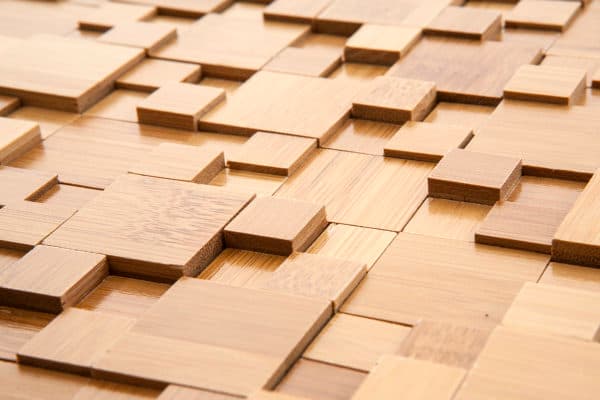
- Bamboo mosaicThese bamboo mosaics are being delivered as tile sheets, with a backside mesh. As usual, mosaics can be mounted on walls or on other surfaces in whole sheets. These mosaics are also applicable as wall covering in bathrooms and finished with a polymer grout. The one which is most vivid is the KUL NC A3, a bamboo mosaic, structured with a natural colour and raw surface.